Internship Prasanna Ramadurai: CFD Modelling Clay as a Fluid

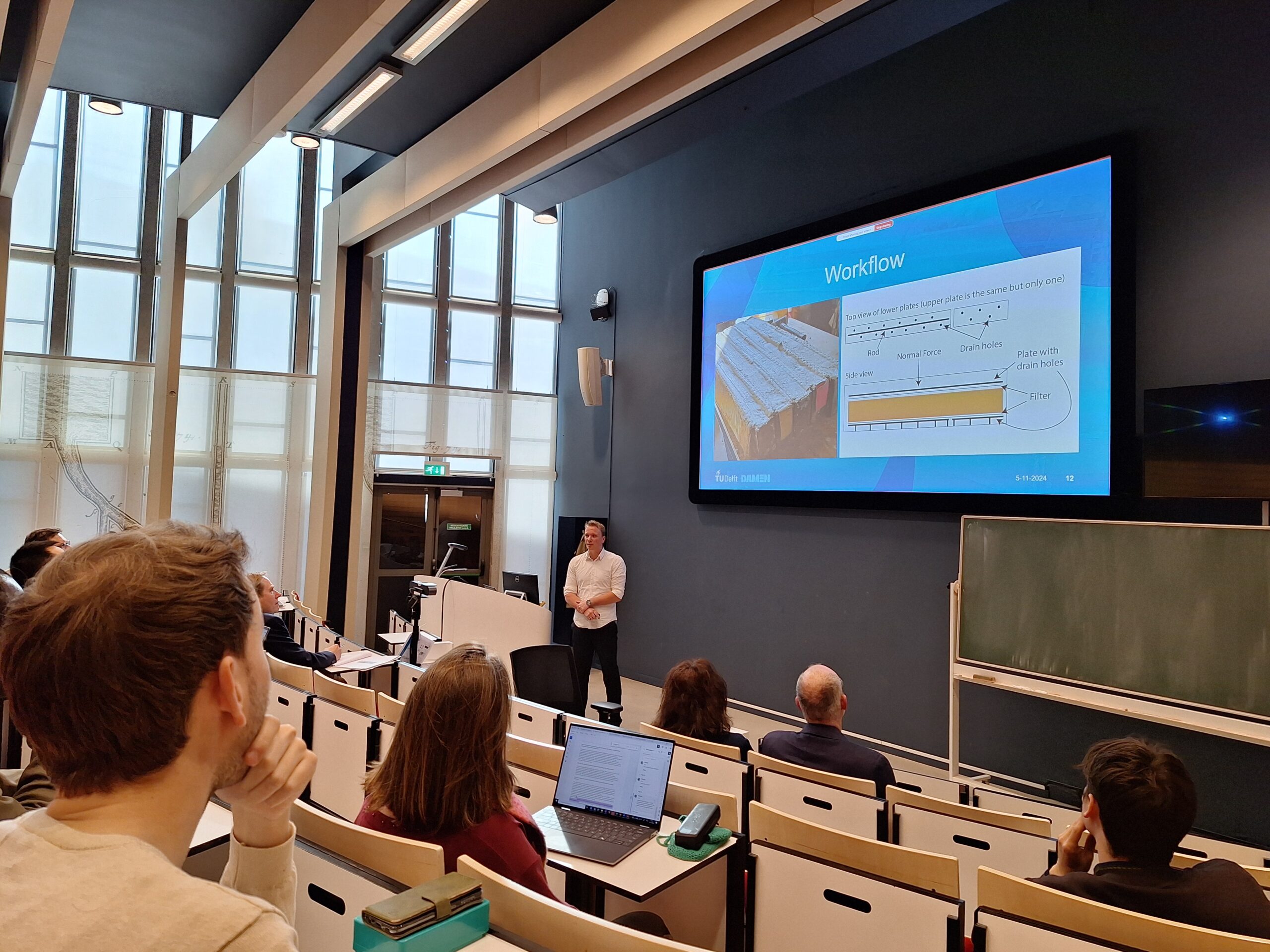
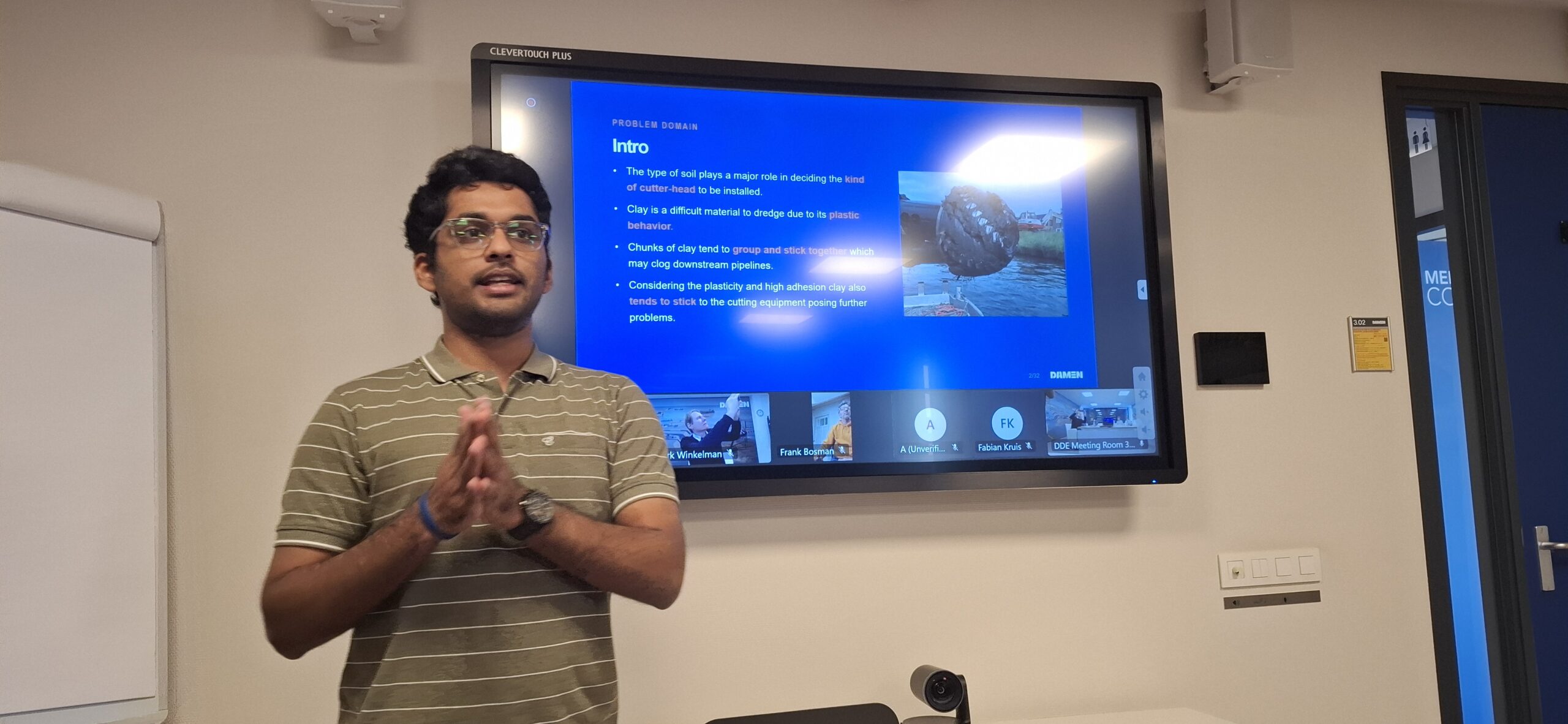
Prasanna presenting his work at Damen Dredging Equipment

Prasanna Ramadurai has been doing an internship with us at Damen Dredging Equipment for my PhD project on the cutting of clay1. As an old fashioned analytical and experimental dinosaur, I have been working in my comfort zone. However, when submitting articles the response from the reviewers has been: ‘How about validating your results with a numerical simulation?’ And that is exactly what Prasanna has been doing for me these months. Now he has presented his work and I can use the results in my own research.
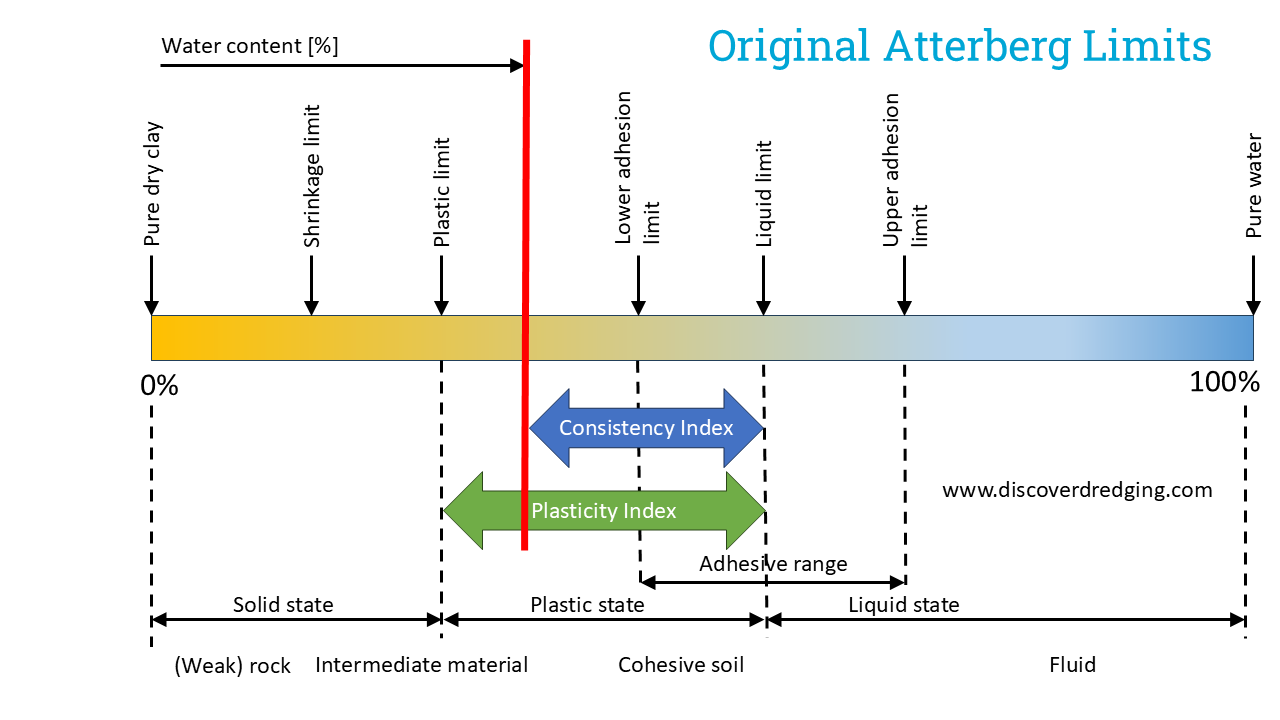
Relation of PI and CI to the adhesion range according to Atterberg

Clay is a strange material. It is neither a solid, nor a fluid. Depending on the amount of water in the material, it can behave like concrete or like water. The scale on which this can be described is defined by the Atterberg limits2. Well known soil parameters as Plasticity Index and Consistency Index are derived from those Atterberg limits. Atterberg himself defined the following limits:

ID Limit name Criteria
1 Upper liquid limit Starts to show signs of a viscous fluid
2 Lower liquid limit Normal Casagrande test or Fall cone test
3 Adhesion limit When no clay sticks to a nickel spatula
4 Upper plastic limit Can be moulded
5 Lower plastic limit Normal rolling test for plastic limit*
6 Cohesion limit When pieces of clay do not stick to each other anymore
7 Shrink limit Normal shrink limit, constant volume for water content
*Atterberg proposed to roll on a paper surface, whereas ISO 17892 proposes a glass plate

The consistency limits as originally proposed by Atterberg

The resistance of a material to deformation can be expressed as the resulting stress due to a strain rate. When there is immediate stress for even the slightest movement and constant after reaching a yield stress, this is typical of a solid. On the other hand, when a material starts to move immediately and the resistance to deformation increases with the strain rate, it is a fluid. And clay is just the typical material that exhibits both phenomena.
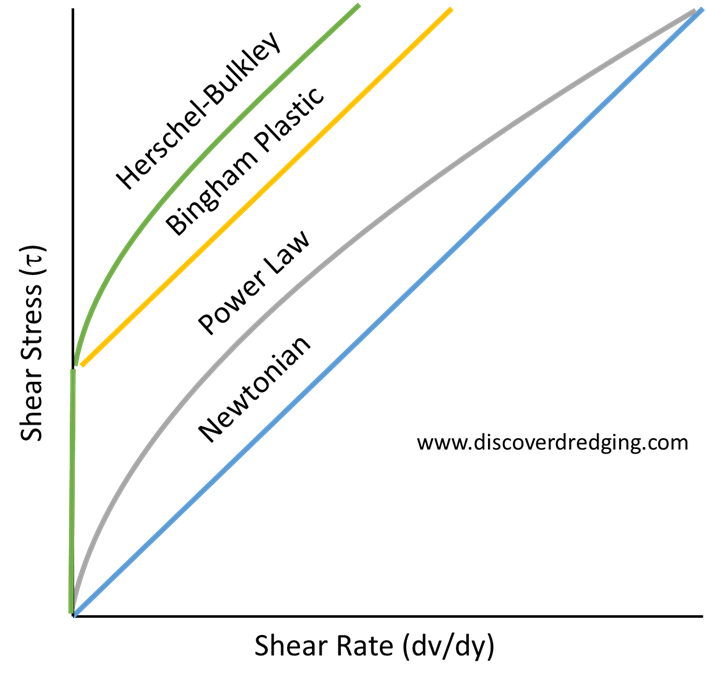
Shear stress models depending on strain rate

In rheology, the factor which shear stress is related to the increased strain rate is called viscosity3. However, due to the internal friction in clay, the stress follows the vertical axis and consequently, the viscosity becomes infinite. Prasanna squeezed out the capabilities of the CFD program using some clever mathematical tricks of a Herschel-Bulkley fluid model to get the simulation to behave. And the results are promising enough to follow up in a separate study.
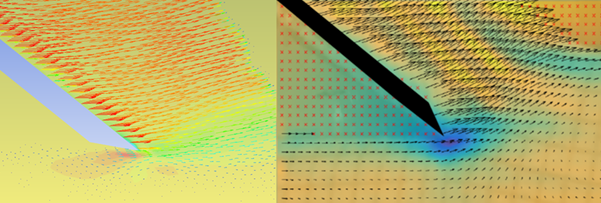
Compare CFD simulation and PIV experiments

For supervising Prasanna, I am very grateful for the assistance of Suman Sapkota for his knowledge of computational fluid dynamics. Together with my knowledge of clay, Prasanna gained a very special set of skills in this area. Prasanna will be back at the TU Delft to continue his master’s graduation project. I can recommend him for having him in your team.
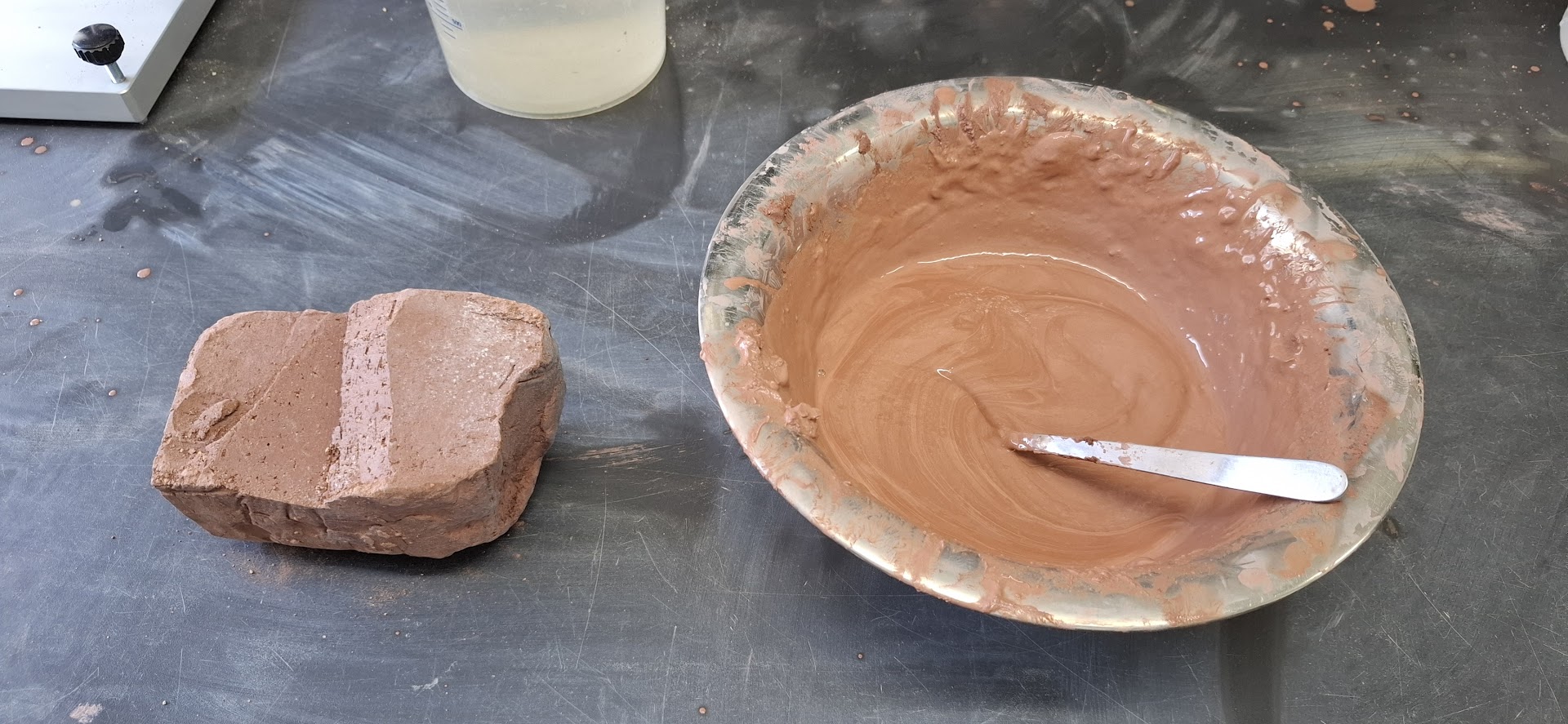
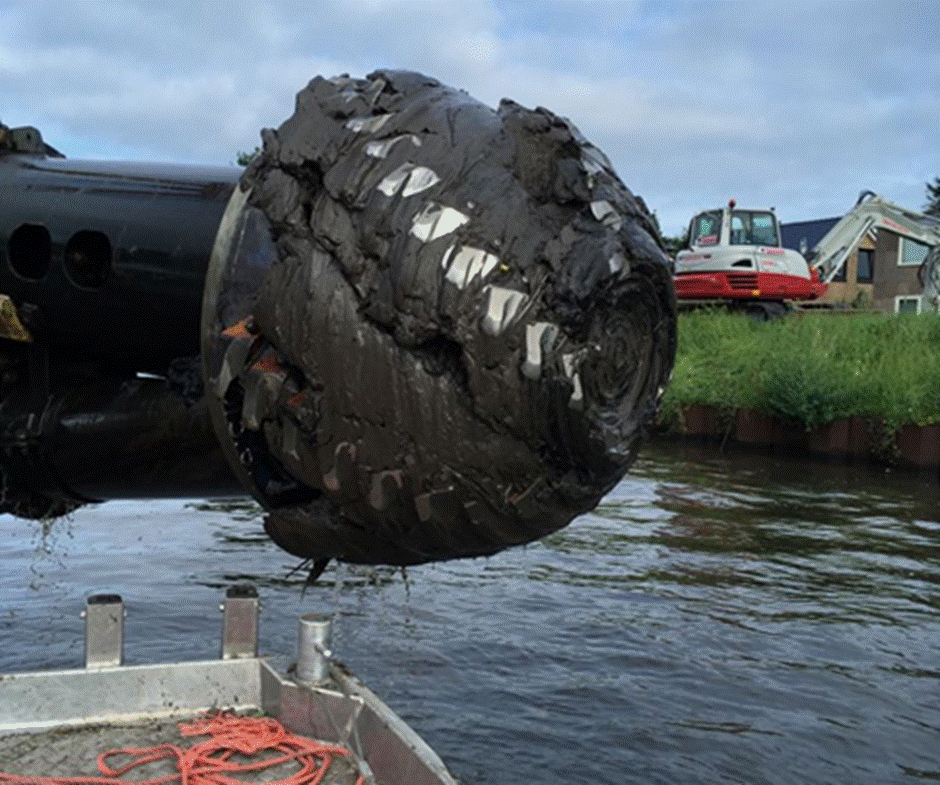
The same clay in solid and fluid form

References

  1. My PhD project posts, Discover Dredging
  2. Atterberg limits, Wikipedia
  3. Viscosity, Wikipedia

See also

Prasanna Ramadurai, LinkedIn

ISFOG 2025: Commissioning The Test Rig And Reporting To Academia

Fully covered cutter head in sticky clay

Fully covered cutter head in sticky clayThis week, I will be presenting my paper1 about the initial experiments on the test rig at the 5th International Symposium on Frontiers in Offshore Geotechnics (ISFOG 2025)2. I will be there in the breaks to explain my poster3 in the lunch breaks. For my audience not present at the symposium, I can highlight the most interesting parts here. I presume, most of you are aware of the operation of a Cutter Suction Dredge and also know about its problems when working in clay. The clay will adhere to the teeth and arms and clog the cutter head. This leads to interruption of the project and in consequence: time and cost overruns. Also, the production itself is difficult to calculate. This is why we at Damen Dredging Equipment started the CHiPS project with the TU Delft4 to investigate the process, improve the estimation model and optimise the design of the cutter head for operation in clay.

Forces involved in the cutting of clay

Forces involved in the cutting of clayFor this purpose, we constructed a linear cutting test rig. Last post about the graduation of Fabian Kruis has more on the results of his thesis5. In the ISFOG article, we wrote about the design and performance of the rig and the opportunities it provides for further research. The design criteria for the rig as was laid down in the assignment for Ines Ben M’hamed were6:

  • Identifying the main parameters influencing the cutting forces and the cutting regime.
  • Designing general arrangement for testing linear cutting models.
  • Capture the signals for force and deformation.

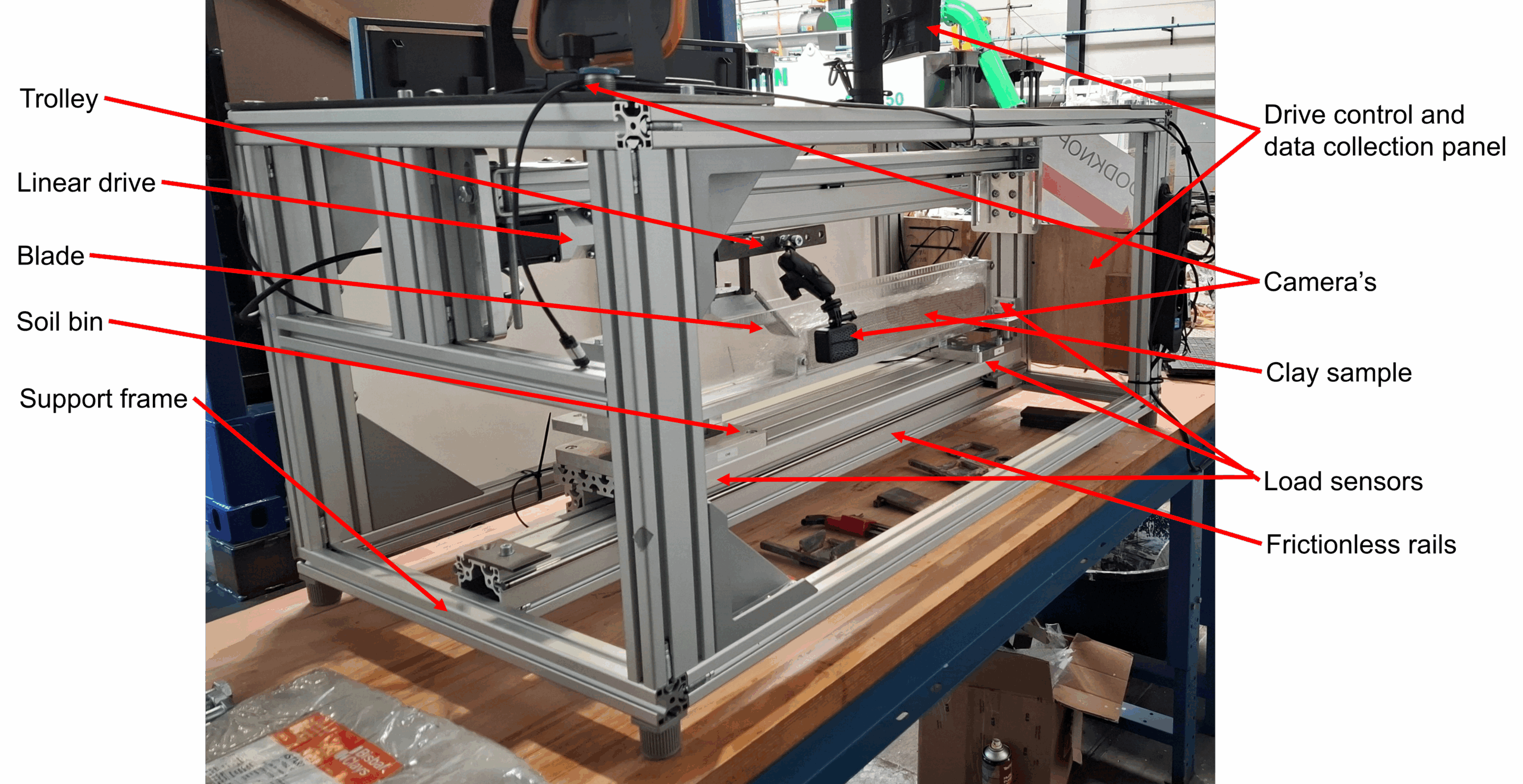
The developed test rig was inspired by the model described by Hatamura and Chijiiwa7. The blade is attached to a linear moving trolley, cutting through a block of clay mounted in a frictionless moving soil bin. The reaction forces on the box are measured. and images of the grid printed on the side of the clay block are captured with a GoPro camera of later evaluation with PIVlab®. A set of 30 experiments was defined according to the Buckingham-PI method as presented at the CEDA Dredging Days last year8.

General arrangement of the linear cutting test rig

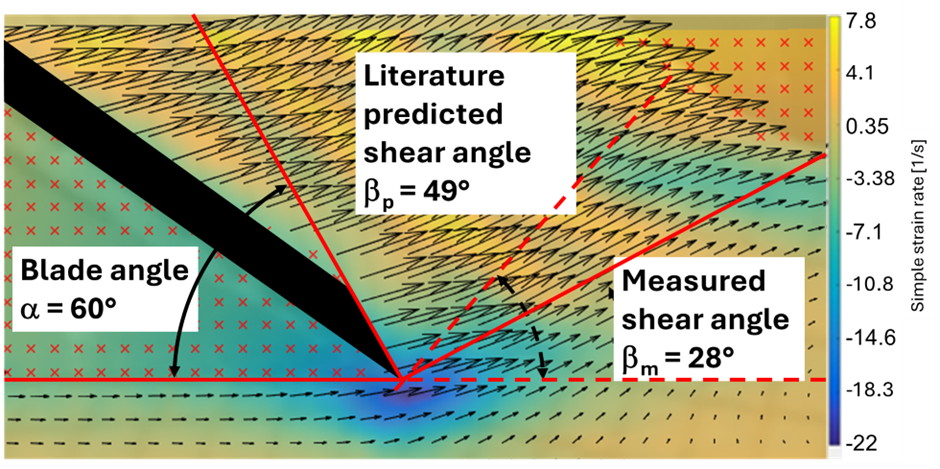
Next to the cohesion and adhesion, the tensile strength of the clay had to be measured to obtain a consistent result. We could confirm the linear relation between cutting depth and the cutting force as predicted by existing models from literature. As we were using modern techniques for capturing images, we were able to accurately measure the displacements with the PIVlab® application. The good results are due to the novel printing technique developed by Fabian Kruis, to apply a grid on the side of the clay sample. One remarkable result is, that most models for the calculation of the sliding forces, only take adhesion into account, but measurements indicate that the external friction cannot be neglected. This appeared in the measured shear angle, which was much lower than the shear angle predicted by existing models.

Captured deformations in a vector field. Note the differences in shear angleCaptured deformations in a vector field. Note the differences in shear angle

The experiments yielded a treasure trove of measurements, we are still analysing them. e.g. We noticed some strange reversal of the vertical cutting forces. And we are interested in the transition from one cutting regime to another. Those results will be presented in my next journal paper. In the mean time I am watching all those captured movies over and over again. To me it’s very inspiring and I like to share an example.

A slow motion movie of a clay cutting experiment (ASMR)

References

  1. Cutting of highly plastic clay: analysis of large rapid deformation processes, Winkelman (paper)
  2. 5th International Symposium on Frontiers in Offshore Geotechnics, ISSMGE
  3. Cutting of highly plastic clay: analysis of large rapid deformation processes, Winkelman (poster)
  4. Personal Announcement: Going Back To School To Cut Some Clay, Discover Dredging
  5. Graduation Fabian Kruis: Modelling Friction In Clay, Discover Dredging
  6. Graduation of Ines Ben M’hamed: The Strength of Clay in a Test Rig, Discover Dredging
  7. Analysis of the mechanism of soil cutting (1st report, Cutting patterns of soils)
  8. CEDA Dredging Days 2024: My Presentation On Clay Cutting, Discover Dredging

See also

Graduation Fabian Kruis: Modelling Friction In Clay

Fabian Kruis presenting his graduation research

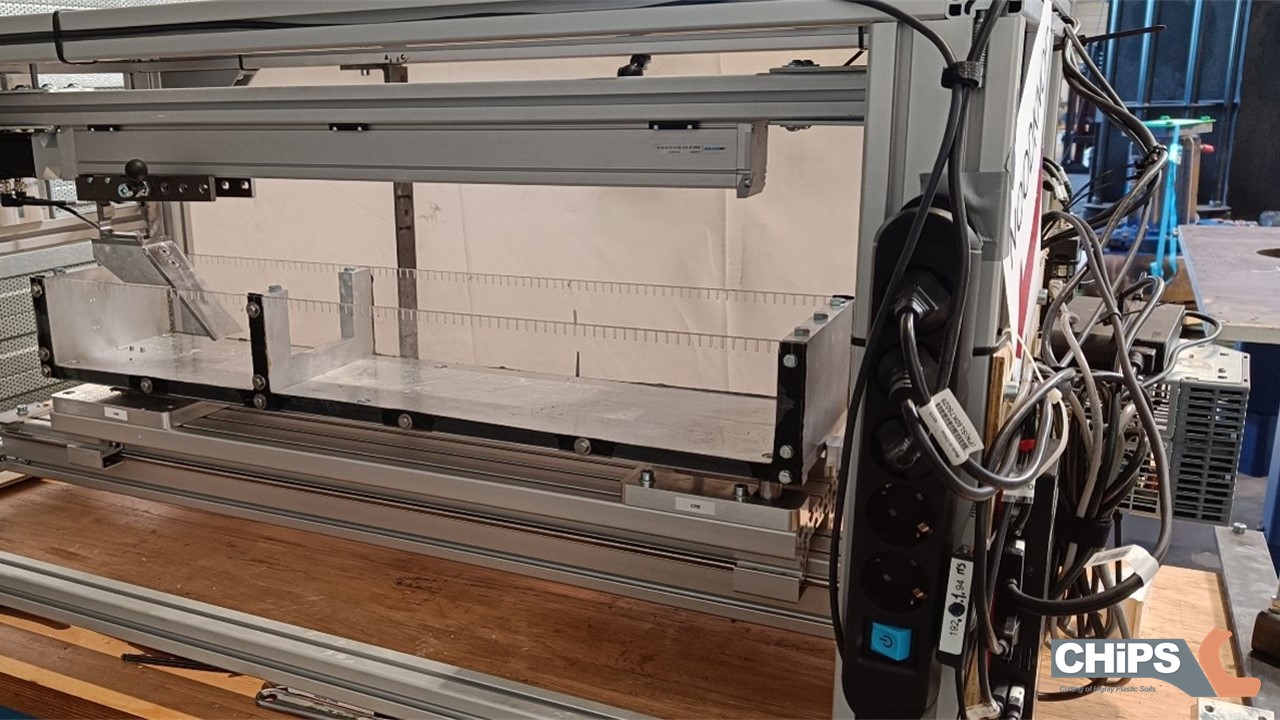
Fabian Kruis graduated on his master thesis at the Delft University of Technology on a project for my PhD research1. He investigated the cutting behaviour of plastic clay. As it was the first time we are now actually using the test rig designed by Ines2, he first had to do was a lot of trouble shooting for commissioning the test rig. Spoiler alert: the cutting forces were much higher than expected and the linear drive was not strong enough to cover the whole range of experiments we’ve wanted to do.

Clay cutting test rig at DDE in Nijkerk

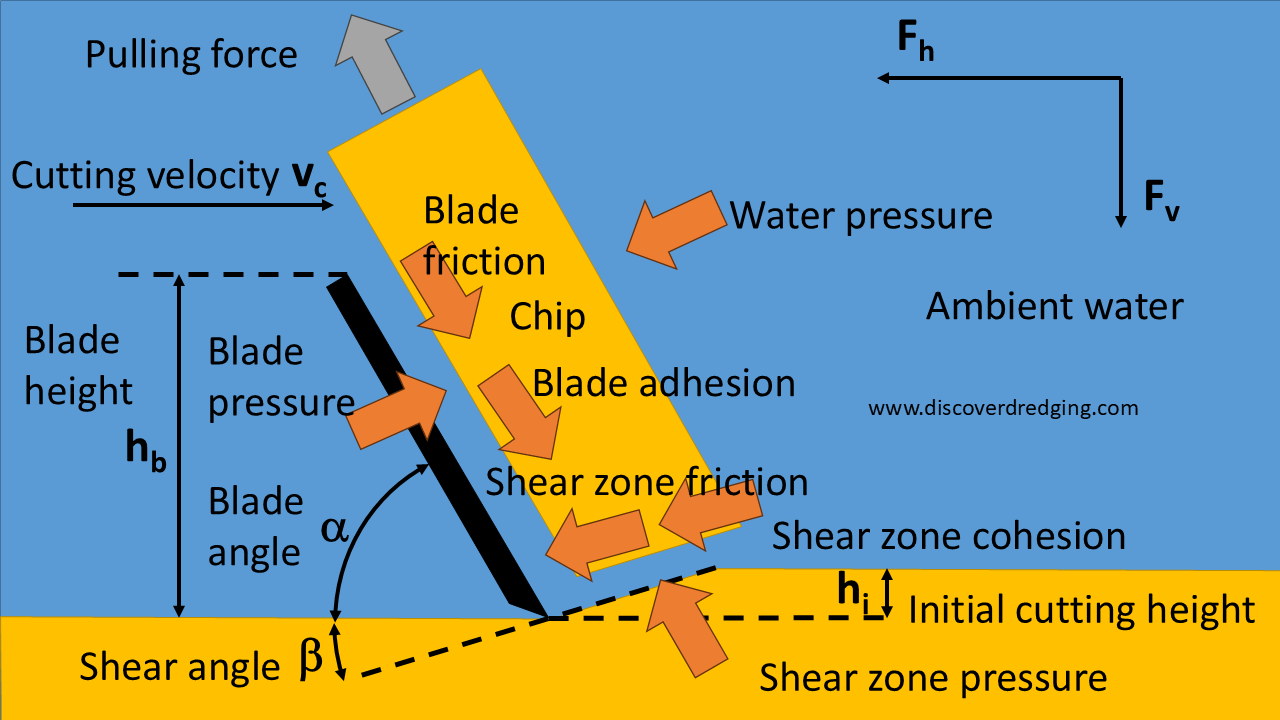
The cutting forces involved with cutting of clay are acting on all four sides of the simplified chip. On the outside, there is the barometric pressure of the surrounding water. On the far end, there is an unknown and hard to determine force from the rest of the chip that is not in contact with the blade anymore. At the shear plane, there are the normal force, the internal friction and the cohesion. At the blade, there are the normal force, the external friction force and the adhesion. The sum of these last three forces will give the cutting force we are looking for, as they make up the required cutting power on the drive. But they can only be calculated, once the other forces are known.

Overview of all the forces involved with the cutting of clay, acting on the chip

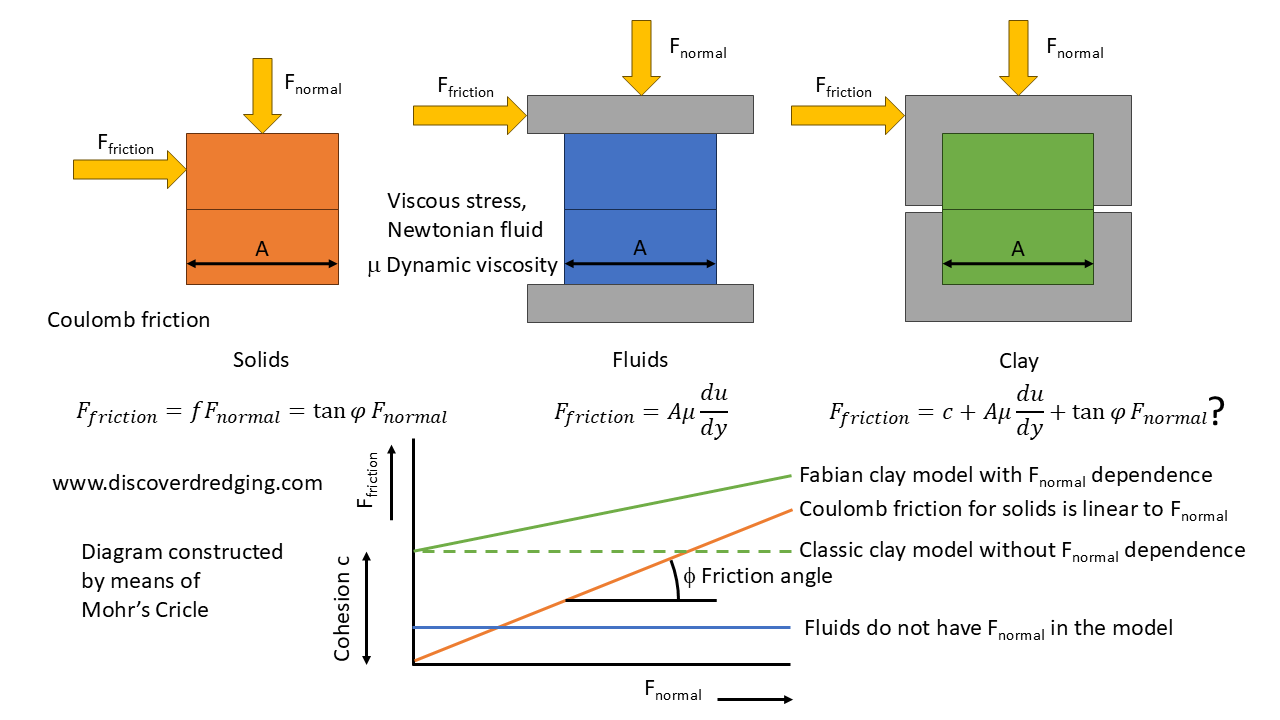
Fabian’s assignment was to have our own experience with the cutting of clay and check whether the models used in the dredging industry have any reliability in predicting the cutting forces. checking whether all assumptions and simplifications were justified. e.g. Plastic clay does have similar properties and behaviour as a fluid. And a fluid does not have an internal friction. Consequently, clay should not have an internal friction also. Right? When there is no internal friction, there can’t be an external friction either. Right, right? Fabian tested these assumptions by actually performing shear tests on internal and external planes.3

Explanation of internal friction for solids, fluids and clay

At least for the clay we used in this research, he already found that the assumption for ‘no friction in clay’ is not valid. Consequently, this had knock on effects on the rest of the cutting force calculation. We did find a different behaviour, the shear plane was off and the cutting forces were indeed much higher than expected. It is now up to me to use Fabians results and model modifications to implement into my own research. As a matter of fact, I used part of his thesis to write an article and hope to present this soon. I’ll keep you update on those developments.
As we are very satisfied with Fabian’s work and him as a person himself, we offered him a position in our team at Damen Dredging Equipment in Nijkerk, which he happily accepted. So, next to progress for my research, we have a new colleague. Welcome Fabian, thank you!

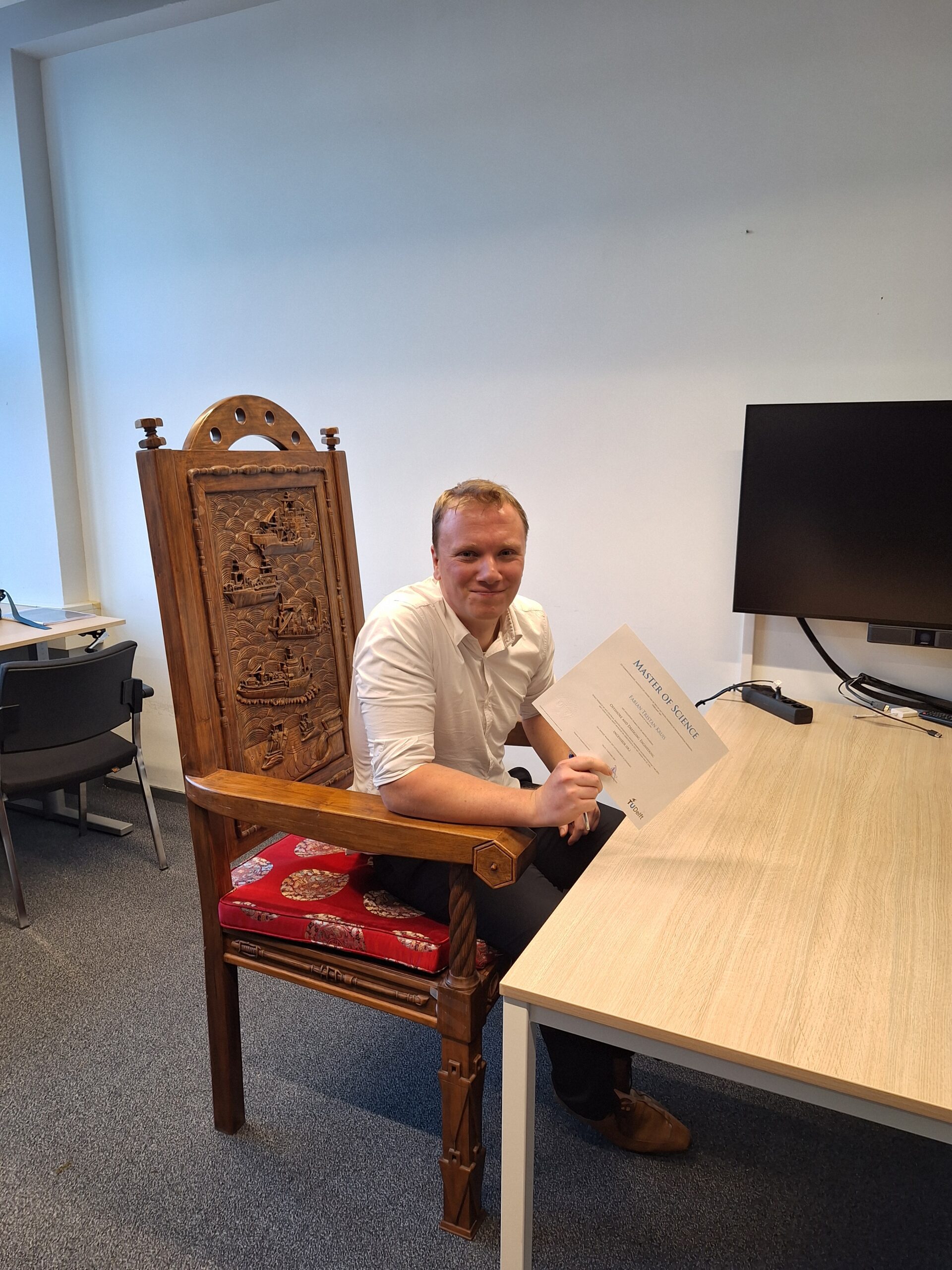
Fabian signing his MSc. certificate.
Fabian signing his MSc. certificate sitting in the ‘dredging chair

References

  1. Personal Announcement: Going Back To School To Cut Some Clay, Discover Dredging
  2. Graduation of Ines Ben M’hamed: The Strength of Clay in a Test Rig, Discover Dredging
  3. Direct shear test, Wikipedia

See also