2021: Muddling Along To A Healthy Year In Dredging

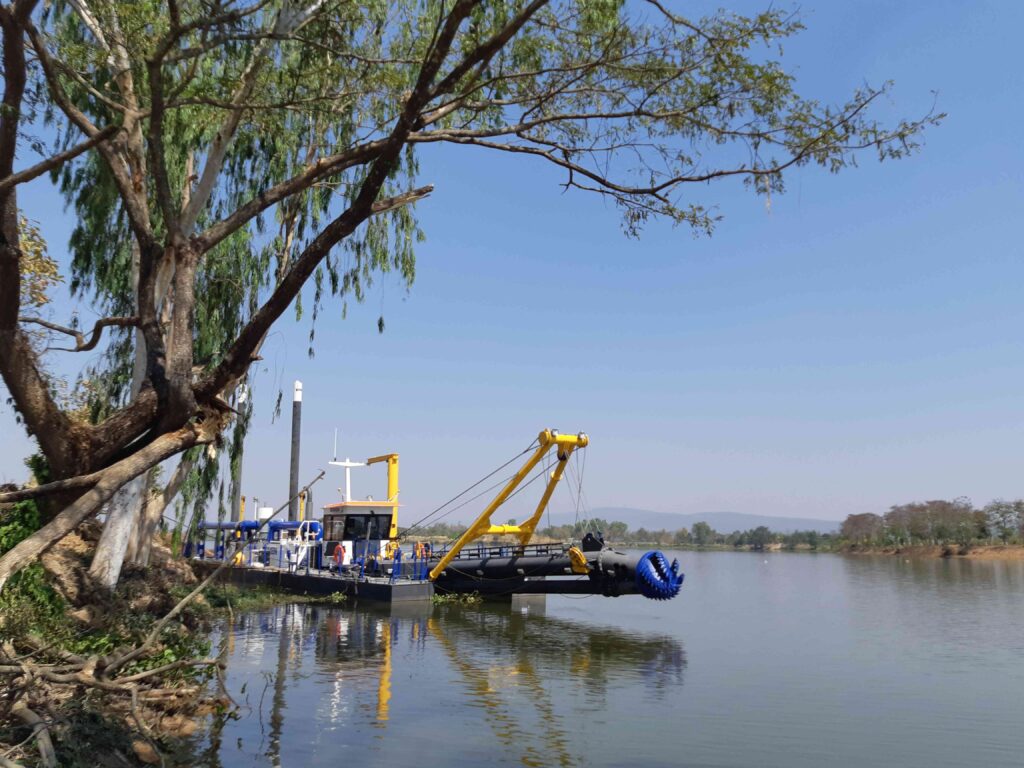
Calendar picture of a sunny dredging site

Dear readers, I sincerely wish you all the best for this new year. As things are looking positive on the vaccine front, we should keep testing negative this year. There are lots of items and events to look forward. Last year was not quite what we’ve hoped for and wished each other.

I do hope all of you are OK and are still together with your loved ones. I am fortunately in that respect. So, next to the Covid situation, there were a lot of other noteworthy items. Most of them have been featured here on Discover Dredging. My trip to Bangladesh, just before all the lockdown measures. The graduation of Carsten1 and Omar2 that were completely over Teams. Some attention to our Damen Dredging Experience3. And some other items. Did you enjoy the Donald Duck review?4

Opening scene of ‘Muddy Fine Business’ or ‘Success Test’ (Credit: Disney)

One sad event was, the last issue of Dredging and Port Construction5. We’ve had to say goodbye to our trusted DPC. Although by now, there has been a kind of digital revival on the CEDA Website6. They opened up a section for Industry News, edited by Namrata Nadkarni. It stands out from the other online media covering dredging as there has been some attention to smaller topics, that would normally not get covered. As I think it is a good initiative, I urge you to subscribe and also participate by sending them any noteworthy news items for publication. Not specifically the usual company press releases, but also the more thought provocative opinions and perspectives on the activities of our dredging community. Active participation could make this CEDA Industry News flourish this year.

Announcement of the CEDA Industry News section (Credit:CEDA)

Further personal activities within CEDA are the Dredging Management Commission7 and I am looking forward to the exciting new concept for the CEDA Dredging Days8. Will you participate? Also, I already took the course on ‘Dredging for Sustainable Infrastructure’9, but you should keep an eye out on the next instalment, coming soon10.

A continuation from last year on my Discover Dredging will be some more articles on our Damen Dredging Experience. There are still some exhibit left to review and teaser:… There are some new exhibits arriving! Hope to have that covered when the pandemic will fizzle out we can show you around through our museum. And I hope to continue on pump and dredge technology.

Overview of the Damen Dredging Experience

Currently, there are some students working on their graduation thesis. Their very interesting topics will be highlighted here as well. Some others will start soon. When you are looking for a fun place to have your internship our your graduation, you might consider a visit to our career page11 or contacting Frank Bosman for any opportunities. Although most positions are filled at the moment, later this year we would welcome fresh brains again.

As our offices will be closed for regular work, I will be working from home most of the time. Probably most of you will do likewise. To keep track of the passage of time over the days, you should have a calendar. As a special service to my audience, I was granted the use of a set of beautiful pictures to create a calendar. You can download the file here and with some DIY skills you should have some original wall decoration for this year.

Stay healthy and stay safe. Hope to see you later this year.

Selection of calendar pictures

References

  1. Graduation Of Carsten Markus: Designing And Casting Of Impellers, Discover Dredging
  2. Graduation Omar Karam: Rock Cutting The Egyptian Way, Discover Dredging
  3. Selected articles on the Damen Dredging Experience, Discover Dredging
  4. Book Review: Donald Duck A Muddy Fine Business; Artistic Equipment Design; Discover Dredging
  5. The Last Dredging And Port Construction Magazine, The End Of An Era; Discover Dredging
  6. Debut of CEDA Industry News section and monthly newsletter, CEDA
  7. Selected articles on the CEDA Dredging Management Commission, Discover Dredging
  8. Call for Papers for CEDA Dredging Days 2021 issued, CEDA
  9. Book Review: Dredging For Sustainable Infrastructure, Discover Dredging
  10. 2nd Online Course Dredging for Sustainable Infrastructure planned for March 2021!, IADC
  11. Welcome to the best years of your life, Damen
See also

Graduation Omar Karam: Rock Cutting The Egyptian Way

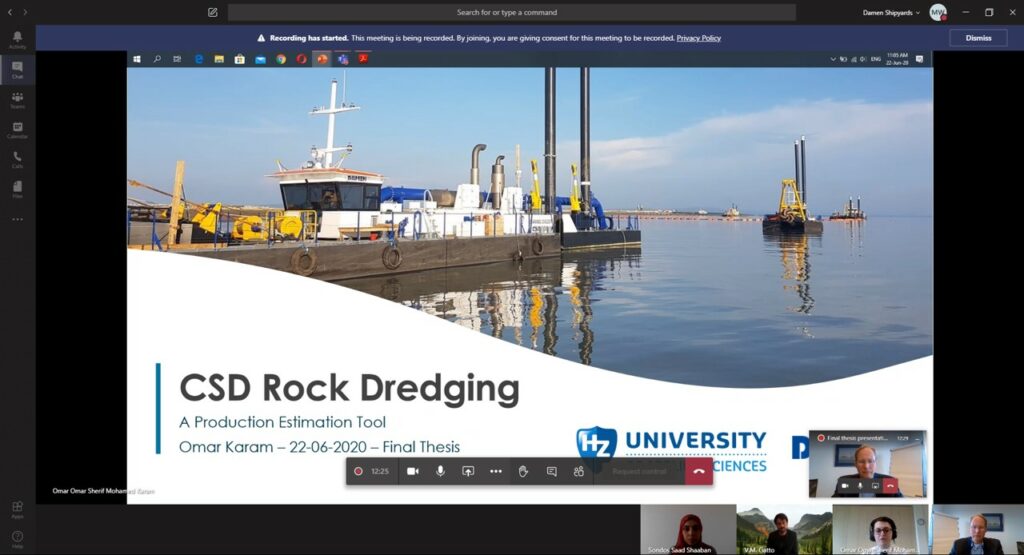
Graduation presentation of Omar Karam

Egypt is a great nation when it comes to ancient engineering. No other country has such a concentration of impressive monuments and such an interesting history as over there. If you are not convinced that modern Egyptians are not capable of great engineering feats you are wrong. Last Monday, Omar Karam graduated at our R&D department of Damen Dredging Equipment1 on his thesis about ‘CSD Rock Cutting.’

Cutting processes have been extensively described by Sape Miedema in ‘The Delft Sand, Clay & Rock Cutting Model’2. Omar has been using the frame work of Miedema to make some useful tools for the estimation of the production of our dredging equipment in rock. In due time, you will find the results of his thesis in the online dredge selection tool ‘Sandy’. Omar’s curiosity and ingenuity does not end here. He will continue studying at a university, but I do hope to meet him again, as he would be a valuable asset for our dredging community. Keep an eye out for him.

Program structure diagram of cutting force calculations

His graduation brings me back to my first lessons in dredging technology at the Delft University of Technology by the illustrious professor de Koning. In a sense he was an old school engineer, who hammered it in to us that thinking is done by doing it with your hands3. Back than the Polytechnic School was just rebranded to University and he was mocking that as a university, we had to set the topics in a broader perspective. So, he started his introduction on cutting technology with some slides of the unfinished obelisk at Aswan4 as every aspect of the cutting process could be illustrated.

Phases of chip forming in rock cutting

The story according to de Koning is: ‘Around the quarry of the obelisk, they have found diorites5. These are some sort of volcanic balls of rock. In combination with the marks and scratches all around the obelisk, archaeologists believe these stones have been used to pound the granite. The impact compresses the bedrock and the resulting stresses fracture the contact surface(1). For every hit a whiff of dust is created. Eventually the dust is collected and scooped away for the next layer. Next, trees would be planted in the trench on one side of the obelisk. The growing root system displaces volume and create shear stress underneath the obelisk that would sever the obelisk from the bed rock(2). At last the trees are removed and dry wooden dowels would have been inserted in the shear cracks. Saturating the wooden dowels will make them grow. The last strands of rock will now be broken due to tensile stresses(3). Repeated insertion of new dry dowels and saturating them will lift the whole obelisk enough to pull some ropes under and carry the obelisk away to the building site.’

Although the diorites and the scratch marks are a smoking gun, current archaeologists argue about the feasibility of this process as experiments yield a very low production and it is doubted that the obelisk could be finished in the lifetime of the client6. Even if disputed, de Koning told a story that conveys the message; I vividly remember it and makes me understand the rock cutting process.

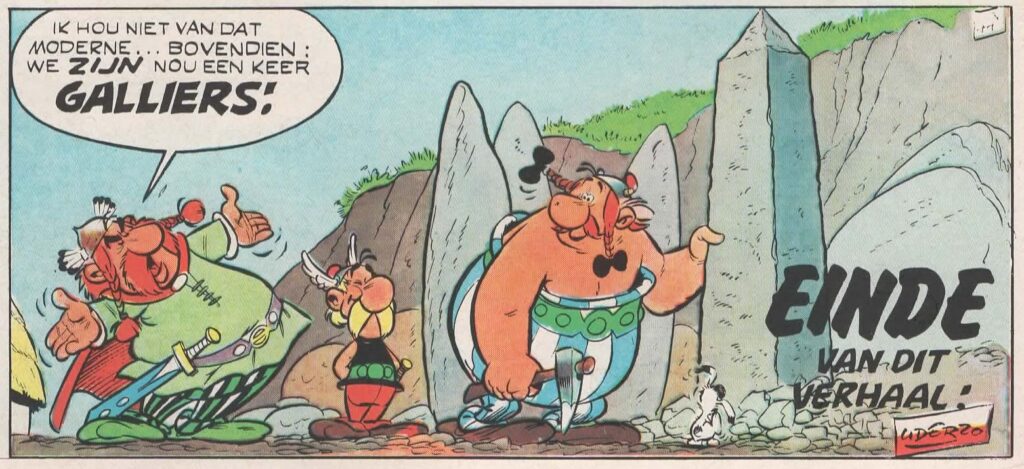
These mysterious monolithic ornamental spires have been an inspiration for many legends and stories. When we have solved the riddle of the rock cutting with diorite balls, it may inspire the development of new rock cutting technology for the dredging community and we can put the story of the obelisks to an end.7

End of the story on the cutting of obelisks (Credit: Uderzo)

References

  1. Innovation, Damen
  2. The Delft Sand, Clay & Rock Cutting Model, TU Delft
  3. De Koning (1978), Denken met de handen’, TU Delft
  4. Unfinished obelisk, Wikipedia
  5. Diorite, Wikipedia
  6. The Unfinished Obelisk, NOVA
  7. Asterix and Cleopatra, Goscinny-Uderzo

See also

Graduation Of Carsten Markus: Designing And Casting Of Impellers

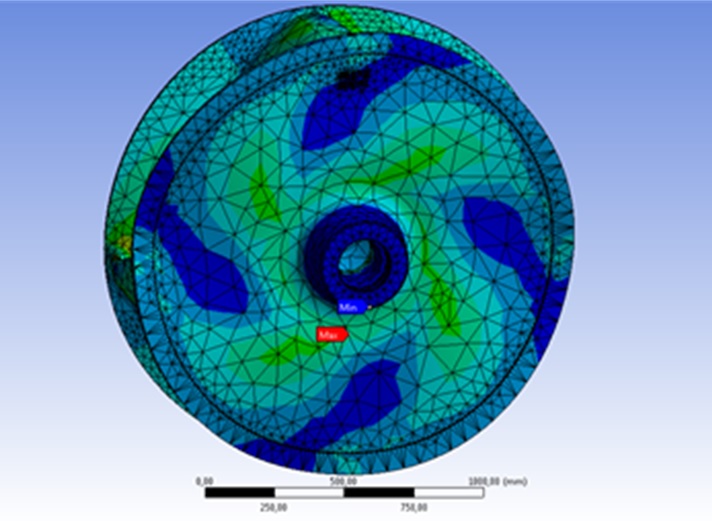
Impeller under operating load.

Last week, Carsten Markus graduated on his assignment with our research department Damen Dredging Equipment. He investigated the alloys that are used to cast our impellers and the responses of the materials under operating conditions. We are always improving our dredge pumps and Carsten’s work has been a great contribution for our development.

For every dredging application, the material for the dredge pump parts can be carefully selected according the specific requirements on the sediment handled. Off course, one would like to have the hardest, most erosion resistant material available. Less erosion is less wear and a longer lifetime1.

Wear part material hardness in relation to wear index

However, there is a downside to choosing very hard material: it will be very brittle also2. Basically, the ultimate tensile stress coincides with the yield stress. There is no reserve for the load. When the stress surpasses the yield strength, it just snaps. Conversely, a tough material has a lot of reserve. After deformation beyond the yield stress, the load can still increase without a catastrophic failure. Usually, the stresses would not be that high, the thickness of the wear parts is dimensioned for erosion reserves and thick parts have low stresses. The high stresses can come from concentrations. Either when the wear reserves are eroded, or when a heavy load is concentrated on a very small area. Usually stones. Stones are a very common problem in a dredging project. So, next to the hardness of an alloy, also the toughness will be a very important characteristic. And toughness is related to the yield elongation after failure.

For the various materials you would like to know how the base load relates to the tensile stress. This would be an indication whether there is reserve in the elastic region to accommodate the impact of an occasional stone. This base load depends on many factors in the pumping process. Mainly the pressure generation in the mixture over the blades. Most known literature is about the force distribution in the volute of the pump, as this is directly related to the radial forces and consequently the bearing and shaft calculations. The CFD simulations in this graduation project revealed the skewed load on the volute and consequently the load variations on the impeller.

Transient CFD simulation of a dredge pump. The rotation appears wrong , but is correct (Wagon-wheel effect).

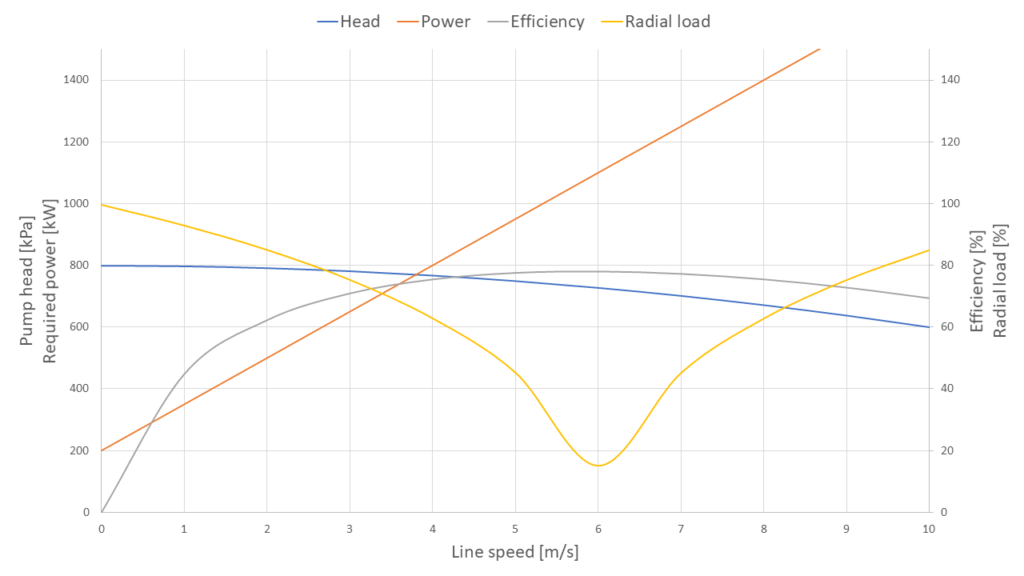
As emphasised before, it is very beneficial to operate your dredge system around the Best Efficiency Point (BEP). Not only the shaft and bearings suffer less, also the impact of the stresses and their variations in the impeller are less. If the operating point differs from the required capacity, the BEP can be moved by changing the dredge pump speed. As long as head requirements permit the adjustment.

Radial load as a function of pump characteristics.

As a result of Carsten’s research, we were able to improve our operating load models for the whole dredge pump and gained insight into the material responses to these. Thank you Carsten.

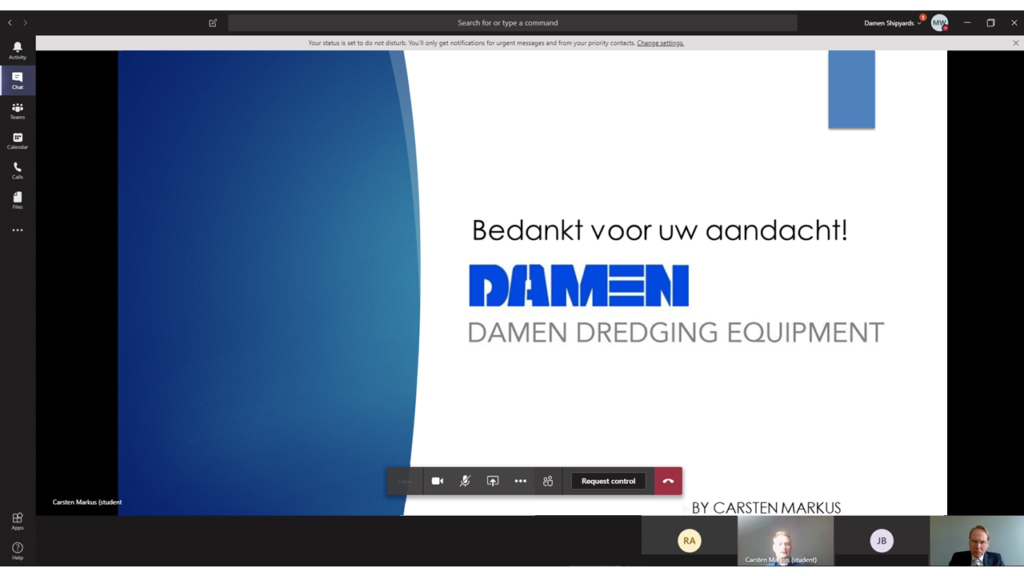
Due to the measures taken for the containment of the Corona virus, the graduation itself and the party to celebrate it, where done remotely over internet. Let’s enjoy the real beer later, after all this commotion is over. Stay home, stay safe.

Carsten’s graduation defence session under Covid-19 measures.

References

  1. Do You Have Wear Parts For Spare?, Discover Dredging
  2. Brittleness, Wikipedia

See also