Book Review: Dredging For Sustainable Infrastructure

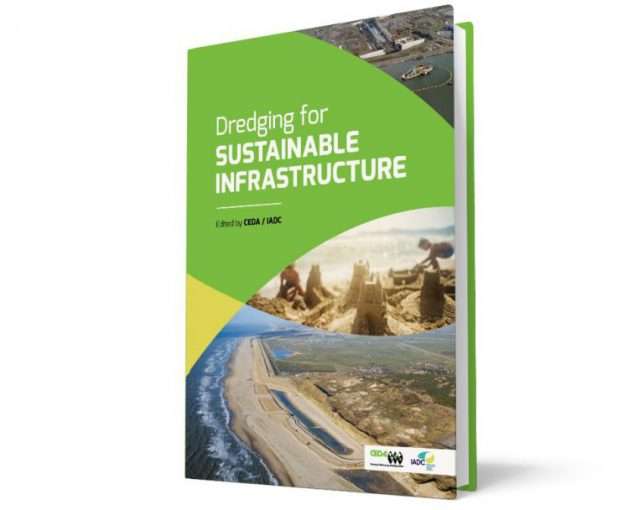
‘Dredging for Sustainable Infrastructure’ (Credit: CEDA & IADC)

Last week, I attended the last sessions of the ‘Dredging for Sustainable Infrastructure’ course, jointly organised by CEDA1 and IADC2. This course is intended to quickly absorb the contents of the book of the same name3 and have a hands on experience of the novel methodology proposed. The book has been written by many different people as members of the participating organisations. As such, it is the condensed knowledge and ideas of the dredging community on a modern approach to infrastructure projects. Although there is a straightforward structure in the book, the publishers initiated courses as an introduction to the book.
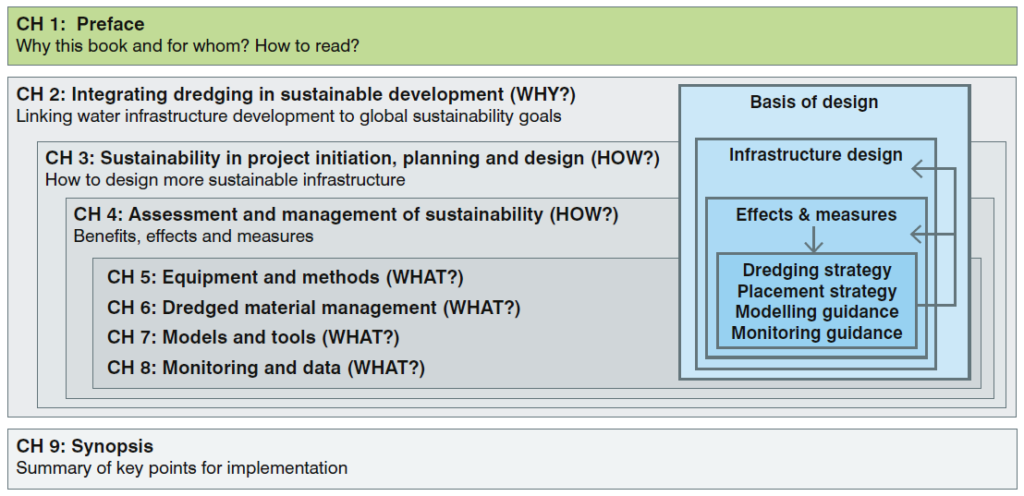
Structure of the book (Credit: CEDA & IADC)

As Covid-19 swept across Europe and thwarted the intended live course days, the sessions were postponed and eventually held online. The presenters, Erik van Eekelen, Thomas Vijverberg and Mark Lee did a good job of introducing us to the book and supervise us in the break out working groups. The central storyline of the working groups was the harbour expansion of the fictional port of Tomigo in the fairy land of Quandany. Each of the participants was assigned a role to represent the consultant, the fishing community, the nature conservancy organisations, the power plant etc. A revelation for me from this interaction is how easy you are inclined to be egocentric in the defence of your interests. With just a little more attention to the other interests, there might be much better opportunities for yourself and for the whole of the project.

New harbour basin development at the port of Tomigo (Credit: CEDA & IADC)

The incentive to produce a book on this novel approach in dredging projects was the UN initiative to launch 17 Sustainable Development Goals4 and the book addresses most of these goals. If we can truly lift the proposed working procedures into an industry standard or even a social mentality, this will be a paradigm shift from where the project was the centre of attention to: ‘Where can nature and society benefit from an economic requirement?’ The next step will be from philosophy to action.

United Nations ‘Sustainable Development Goals (Credit: United Nations)

The focus of the book is very much on the initial stages of a project: include sustainability on the basis of the design of a project, demonstrating options for sustainable solutions suggestion of sustainable techniques. As a dredging equipment manufacturer5, most of the topics will not affect my daily work. Still, in the work group sessions, it was interesting to see the interaction between the various parties that are involved with the initiation of a project. As a dredge builder4, we usually meet the requirements for the equipment applied. Though, the technical solution to achieve this might be not the most commercial solution. However, the book makes it clear and provides examples, that taking all aspects of a project into account, including social and nature opportunities, the benefits of a sustainable approach of a project might still make a viable business case.
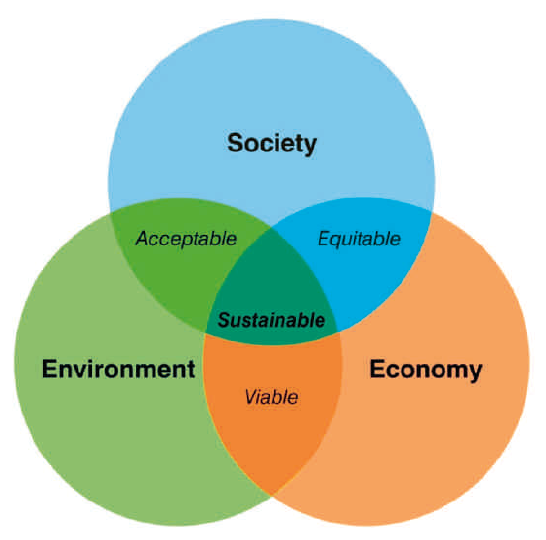
Three pillars of sustainability (Credit: CEDA & IADC)

The verdict on the book: it is a reference book. And as such it is very tiresome to plough through. However, the course is very enlightening as introductory lectures into the contents. Then the meticulously compiled information starts to live. Don’t depend on the courses alone, also leaf through and note all the valuable tables, graphs and diagrams, especially the guiding boxes that can assist you in setting up your dredging project. It definitely belongs on your bookshelf.

‘Dredging for Sustainable Infrastructure’ in our bookshelf

References

  1. CEDA and IADC launches new ‘Dredging for Sustainable Infrastructure’ Course, CEDA
  2. Online Course ‘Dredging for Sustainable Infrastructure’, IADC
  3. Dredging for Sustainable Infrastructure, CEDA&IADC
  4. The 17 goals, United Nations
  5. Damen Dredging Equipment, Damen

See also

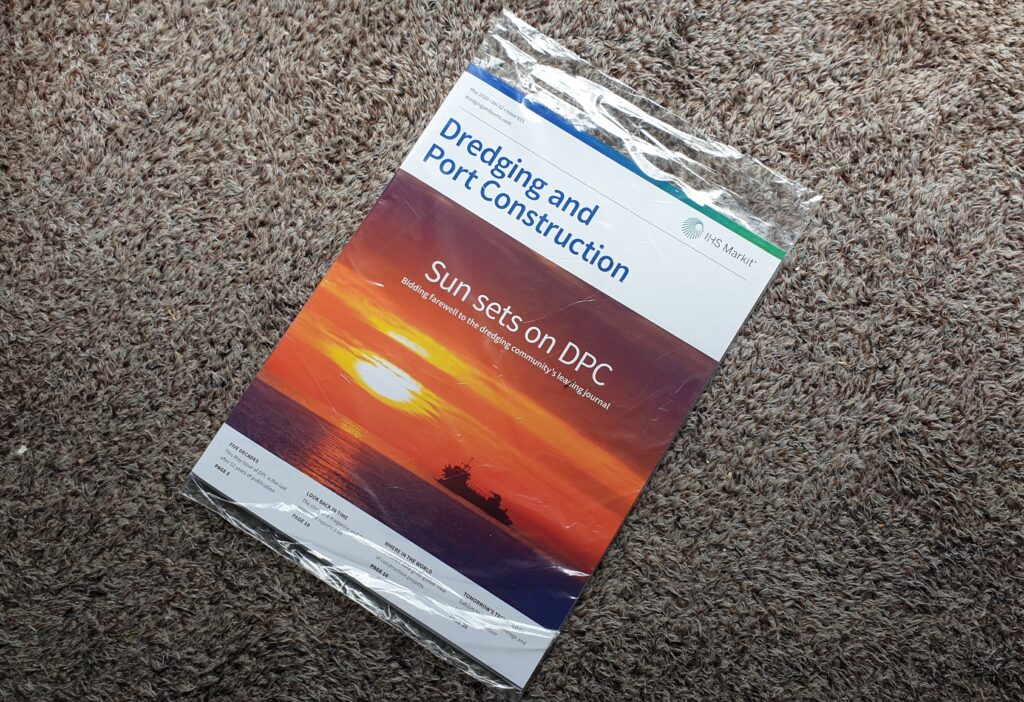
The Last Dredging And Port Construction Magazine, The End Of An Era

The last issue of Dredging and Port Construction

It is not very often that one experiences the end of an era. Hiroshima, the fall of the Berlin Wall, Brexit. Those were very important events with a global impact. Now there is another end of a period, with only a limited impact on a small community affected. After half a century, our trusted journal ‘Dredging and Port Construction’ has come to an end1. In the fast moving media world, this will only be a footnote in history. Yet, as a magazine, it was close to our community. It reported on projects and people we knew, but also as a platform for the CEDA to communicate with us for 42 years2.

IHS Markit has decided to cease this publication, the lack of new subscriptions and decreasing advertisements. You know, the general malaise in paper printing. Somehow, the digital revolution didn’t turn out so well for them. Other digital media providers covering the dredging industry seem to have a better business model to survive the transition. Right?

Well, there is a big disadvantage of those free service, hot shot, social media savvy new comers, they just forward press releases that they receive or sweep up from social media. They don’t have dredging literate expert editors writing long genuine articles about topics that would not have access to coverage by themselves. Having your own knowledgeable editors doing original research vetting the facts and reporting from a broad perspective with a solidly founded opinion is expensive. And that makes it very difficult for a classic publisher to survive in these modern times.

We will suffer in this new era without our trusted DPC. We can sign up to the usual free subscription daily newsletters from the new media publishers and read the endlessly repeating press releases. We will miss the in depth reports on big projects or critical comments on regulatory issues. We will have to figure this out from within our own social media bubbles. It will narrow our view and I certainly hope we don’t lose the perspective of other members in our community.

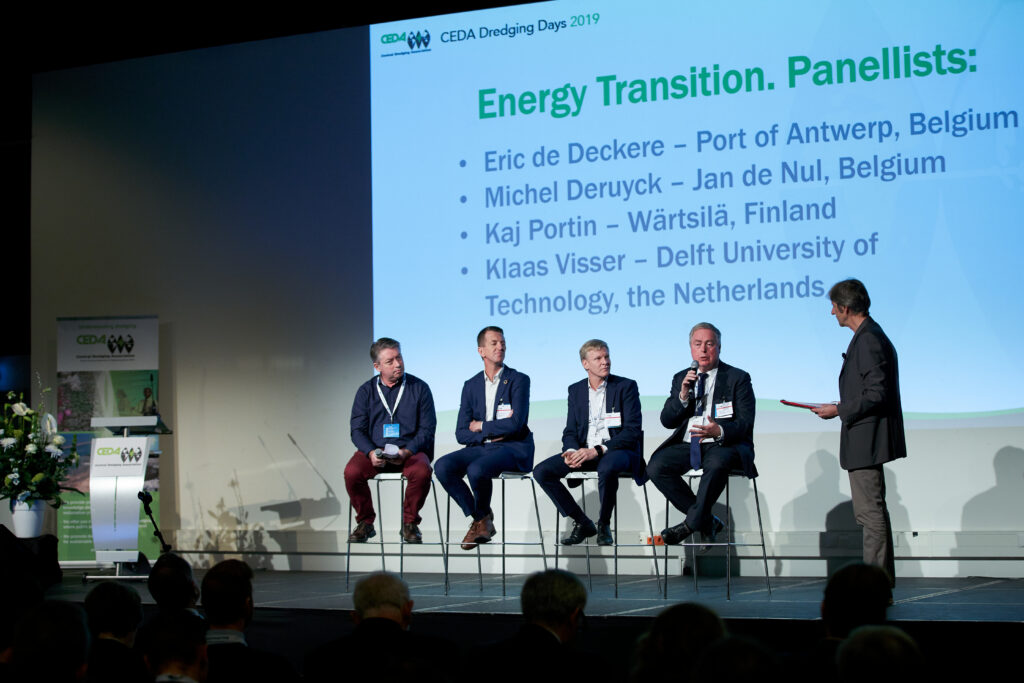
Please be advised, that also the website will be closed at the end of June3, leaving only the digital archive of the magazine accessible4, which goes back to May 2015. Although the last editor, Ines Nastali, told me she is happy to send out articles if requested by the dredging community. There will only be some dusty old paper versions that are stored in a forgotten archive or that one issue we keep for some sweet memory. At least that is what I have done. Over the years, I have written several articles that have been placed in this magazine and I cherish those issues. The first one was already long ago about a CEDA excursion to the IJsseloog in the Ketelmeer project. The last one was a reprint from my post5 about energy transition in the dredging industry discussed during the CEDA Dredging Days6.

CEDA Dredging Days 2019 panel discussion (Credit: CEDA)

It was a good experience to contribute to the magazine that way. And made me proud, that my posts at this website were picked up by the media. I will see what will come along in the future. I am open to any opportunity. At least, I am determined to keep www.discoverdredging.com alive as an independent platform to point out dredging related topics. And this will be a lonely place left to find an opinion about our community, albeit, very personal.

Although we are an industry in an economic sense, it is a community. When I think of companies and projects, I think about the people I know over there. And my memory about Dredging and Port Construction will not only be the magazine, but also the nice cooperation with the editors. At this moment I would like to especially thank Tony Slinn, Lisa Maher and Ines Nastali for a their work.

Ines Nastali, senior custom publishing editor (Credit: Ines Nastali)

References

  1. End of an era, IHS Markit DPC
  2. IHS DPC Latest, CEDA
  3. About us, IHS Markit DPC
  4. Welcome to your digital magazine portal, IHS Markit
  5. We Choose To Adopt Energy Transition, But How Will We Succeed? Discover Dredging
  6. Dredging industry addresses energy transition challenges, IHS Markit DPC

See also

CEDA

CEDA DMC Works On A Guidance Paper For Soil Investigation

CEDA Dredging Management Commission WG on Soil Investigation (Credit: CEDA)

Did you ever start a project and it turned out that the conditions were different than expected? Welcome to the dredging industry. One of the most underestimated preparations for a dredging project is the soil investigation. As this investigation is of the utmost importance for the dredging community, the DMC is preparing a guidance paper on this topic1, which we discussed last meeting (February 7, 2020, IMDC, Antwerp).

Working for a dredging equipment manufacturer, I am not much involved in the actual soil investigation. However, often our clients base their purchase of a specific type of equipment on the soil investigation and as such we are often presented with the reports on soil investigation. Based on these reports, we calculate the possible production for various types and advise the client for a dredge that will meet their requirements on the maximum production. most of the time we provide a good advise and the client is happy.

Off course there have been occasions where the performance was not as expected. Often because the report on the soil investigation was inadequate. Either the report did not contain all the details, or the investigation itself was lousy. Either way, rubbish in, is rubbish out. Just as an example, let me tell you what can go wrong, when the information is not representing the real circumstances.

One of our products are the so called ‘DOP Dredges’2. They are based around the versatile DOP pump. Basically, it a DOP suspended on an A-frame on a pontoon with a powerpack. The DOP can be lowered into the sediment and create a typical suction dredge pit. The production is more based on the rate that water can enter the bank face and the velocity that the banks recede. Our client provided us a Particle Distribution Diagram of the available sediment3. It was a nice narrow graded sand, but there was a considerable fines tail on the lower end. This was being dealt by the washing and screening installation. According to the client was this the sand characteristic from the whole pit. And what could be better? If you excavate all the material, you really know what is there, right?

Difference between expected soil conditions (left) and real situation (right)

Well no. As it happened, there were cohesive silt layers between the narrow graded sand layers. When dredging, they sucked at the bottom of the pit. Any silt layers gradually broke of and disintegrated by the eroding density flow. As the pit was created over a long period, the falling chunks of silt just slid down the slope, without causing any harm.

Enter: the new DOP dredge. It started in a new corner of the pit and initially had some trouble penetrating the silt layer. Eventually it managed to get through and started excavating a cavity below the silt layer. These broke of, burying the DOP. Without any possibility to recover the DOP, it turned into a very expensive anchor.

Risk of getting your DOP trapped in a cavity under the cohesive silt layers and the solution

If the presence of these cohesive silt layers would have been known, we would have adapted the suction pipe for a deeper penetration. That prevents the DOP becoming covered and facilitates easier extraction. This story proves two things: 1. A proper soil investigation can prevent costly accidents and budget runovers. 2. A DOP can be modified to most requirements, when the circumstances are known.

Meanwhile, the DMC is preparing its guidance document to assist you in preventing problems like this. Follow CEDA for updates4.

Standard suction tube (left) and long suction tube (right)

References

  1. Dredging Management Commission, CEDA
  2. DOP Dredger, Damen
  3. A Sample of Soil Samples, Discover Dredging
  4. News, CEDA

See also