Young CEDA Evening: the Grabbing History of Dredging

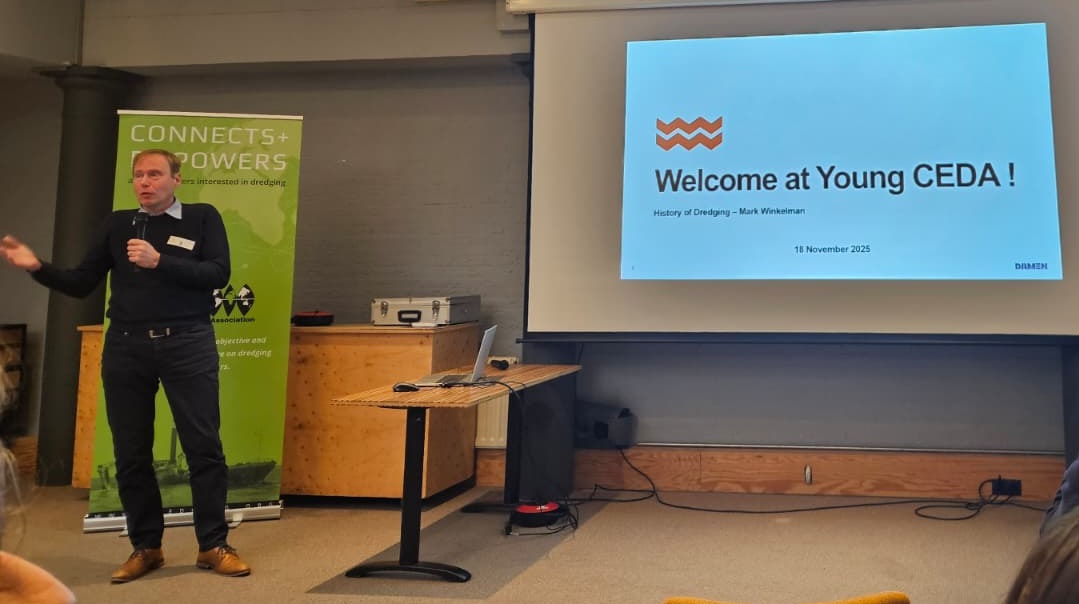
Presenting my lecture on the history of dredging at Young CEDA

Last Tuesday, I gave a presentation for Young CEDA1. The topic was to be about the history of dredging2. And I happily accepted the invitation to educate the younger generation into the tradition of our craft. I consider myself somewhere in between. Not part of the old generation, but past the younger generation. Though I am old enough to have heard the old guys talk about their history and their knowledge of where our modern industry came from. In particular those stories came from the lectures by professor Jan de Koning3 I attended as a student. He really was able to put a perspective on the origins of processes and technologies. Some of those stories have been recounted on my website already4. The oldest dredging project5, the oldest rock cutting technology6 and the oldest dredge canal7 still in use. They were all there at the presentation that evening.
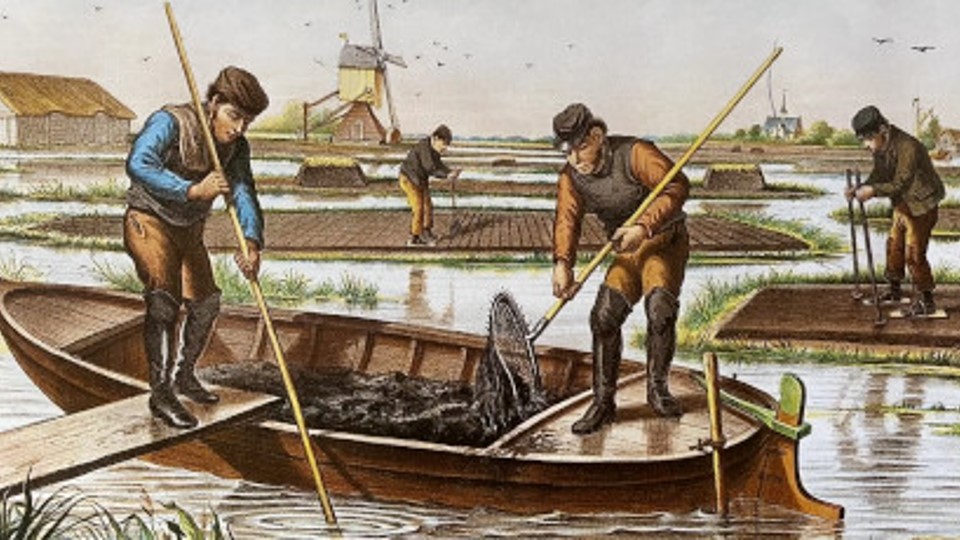
Traditional dredge scoops for peat dredging and waterway maintenance (Credit: Wikipedia)

Here I would like to focus on another development presented that evening, but new on my website. A well known tool in the industry was the dredge scoop8. It has been used for ages, until even recently. However, the working depth is limited to the length of the stick. Longer would make it hard and impractical to use efficiently. In ancient Persia, there were three Banū Mūsā brothers9. Three scholars in 9th century Baghdad, who worked on astronomy, mathematics and engineering. Ahmad Banū Mūsā published ‘The Book of Ingenious Devices’10 which described a tool to pick things up from underwater, specifically oysters.
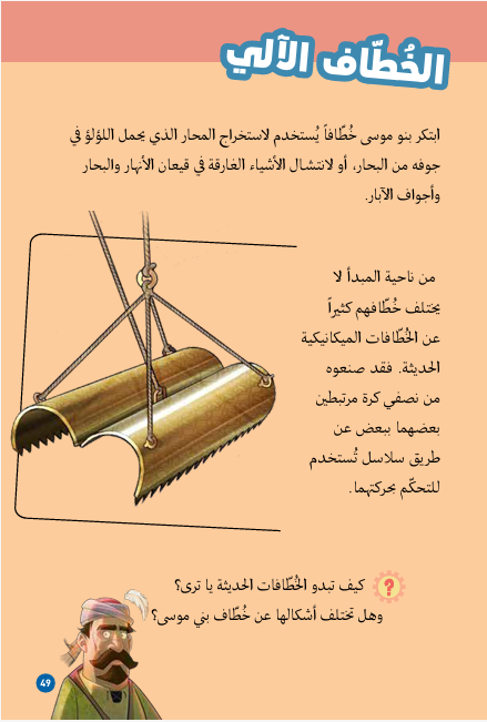
Oyster grab invented by Ahmed Banu Musa (Credit: 1001 Inventions)

Ahmed Banū Mūsā described in detail the phases in the cycle: lowering, closing, lifting and opening. And it already looks very familiar to the grabs we are using today in the dredging industry known as a clam shell grab. Modern versions are constructed from steel and hydraulically operated. The capacity is usually a couple of cubic meters. But there are designs of up to 200 cubic meters11. The advantage of grab cranes is their simplicity and employability. Whether sand, clay or rock, special versions can adapt a crane to the requirements of your project. The disadvantage is that they can be messy and it is a discontinuous process. Usually involving multiple barges, making them labour intensive. Still, with the right experience and man power, this is the tool of choice for many countries.
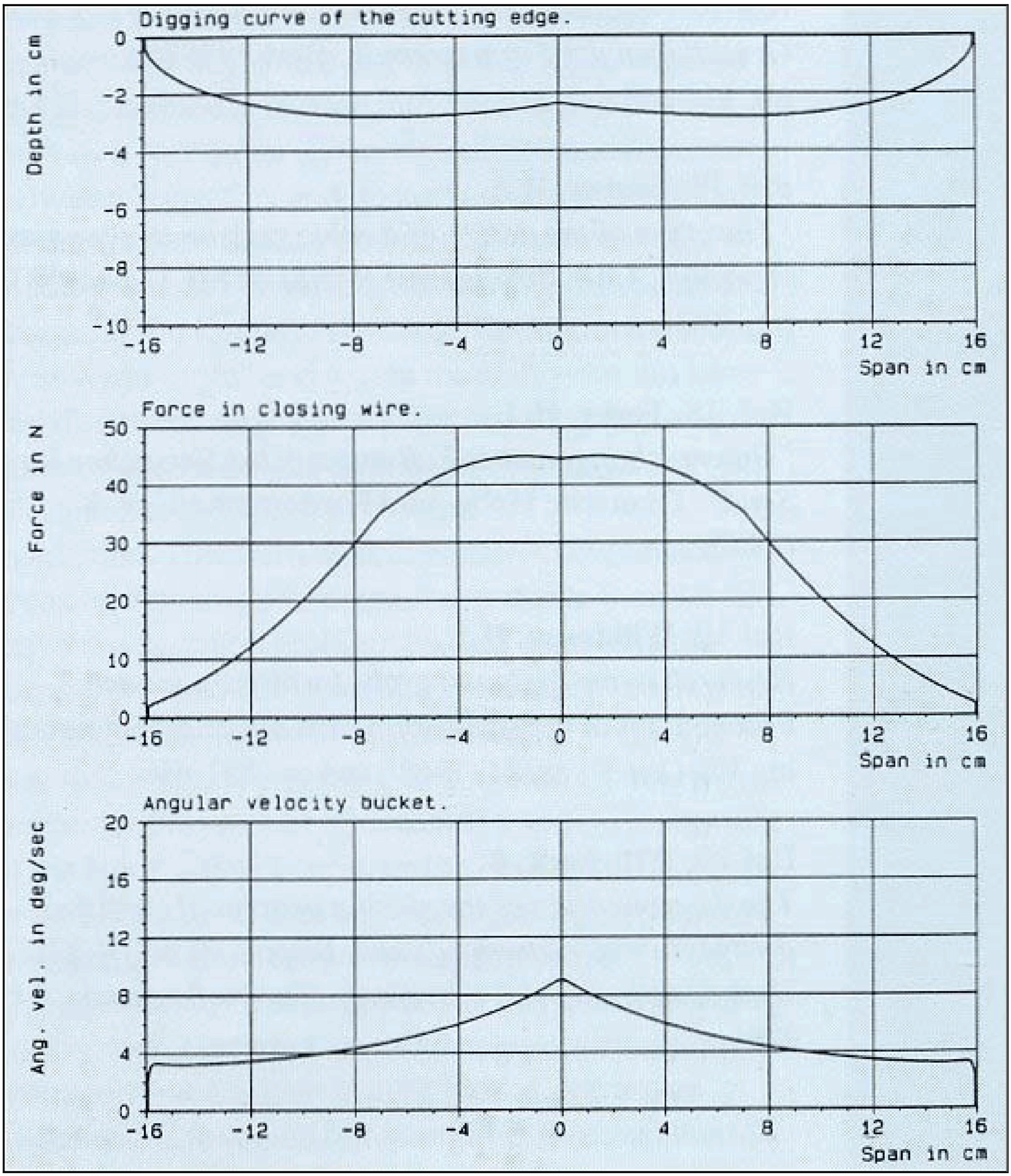
Closing process of a clam shell grab under water (Credit: Sape Miedema)

One of the most important phases is the closing process of the clam shell grab. Here are the limitations on the power and operating speed, that are the most important in the calculation of the cycle time and equipment capacity. Sape Miedema has proposed a model for this phase in the grab cycle12. The rest of the cycle is just adding up the operating times and multiplying by your number of cycles.
Sometimes the grab crane is placed on the barge itself to reduce the total investment and running costs. When looking for such a vessel, it can also be interesting to consider adding a trailing suction pipe or a DOP pump to make the vessel even more adaptable to the project requirements.
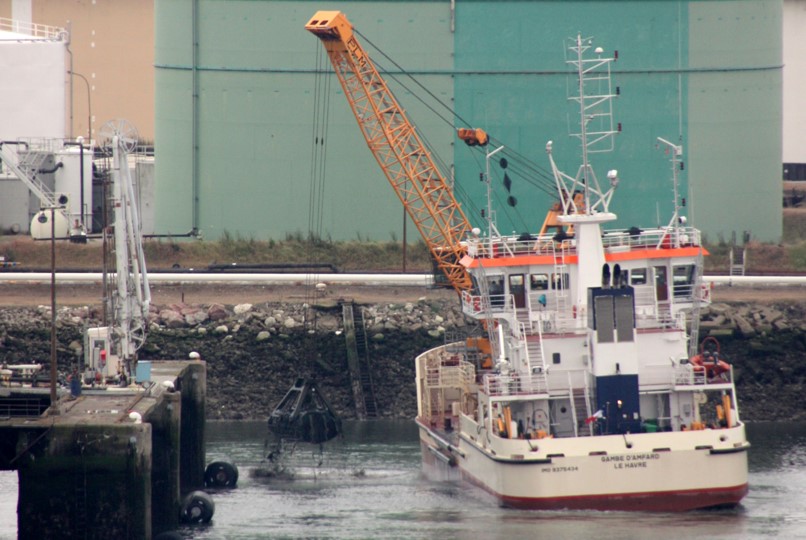
Damen clam shell grab crane hopper with a trailing suction pipe

References

  1. Young CEDA, CEDA
  2. Young CEDA, CEDA-BE & CEDA-NL Event, CEDA
  3. Tag: De Koning, Discover Dredging
  4. Category: History, Discover Dredging
  5. The Ancient History of the Cutter Suction Dredge ‘10th of Ramadan’, Discover Dredging
  6. Graduation Omar Karam: Rock Cutting The Egyptian Way, Discover Dredging
  7. Historical Origins Exhibition at the WODCON: the Beijing-Hangzhou Grand Canal, Discover Dredging
  8. Paying Tribute to the Hard Life of Peat Dredgers, Discover Dredging
  9. Banū Mūsā brothers, Wikipedia
  10. Book of Ingenious Devices, Wikipedia
  11. Tosho, DredgePoint
  12. The Closing Process of Clamshell Dredges in Water-Saturated Sand, WODCON

See also

Young CEDA Visits Damen Dredging Equipment

Group picture of the Young CEDA visit to Damen Dredging Equipment

CEDA has always been an advocate of sharing and disseminating knowledge, with an attention to personal contacts1. Of course, there are the high profile Dredging Days2 and the WODCON3 level events, but once in a while there are also smaller events. As part of the smaller program, Young CEDA4 regularly organizes visits at projects and companies to bring together the new generation of our dredging community. This time, a group of young professionals visited our company Damen Dredging Equipment here in Nijkerk5 to get familiar where we are and what we do. Rick Bekkers, Jorgen Groeneveld, Suman Sapkota and Reinier de Vries where hosts of the event and organised, with assistance of the ladies of our reception and back-office, a nice program with presentations a yard tour and of course drinks and the proverbial ‘bitterballen’.

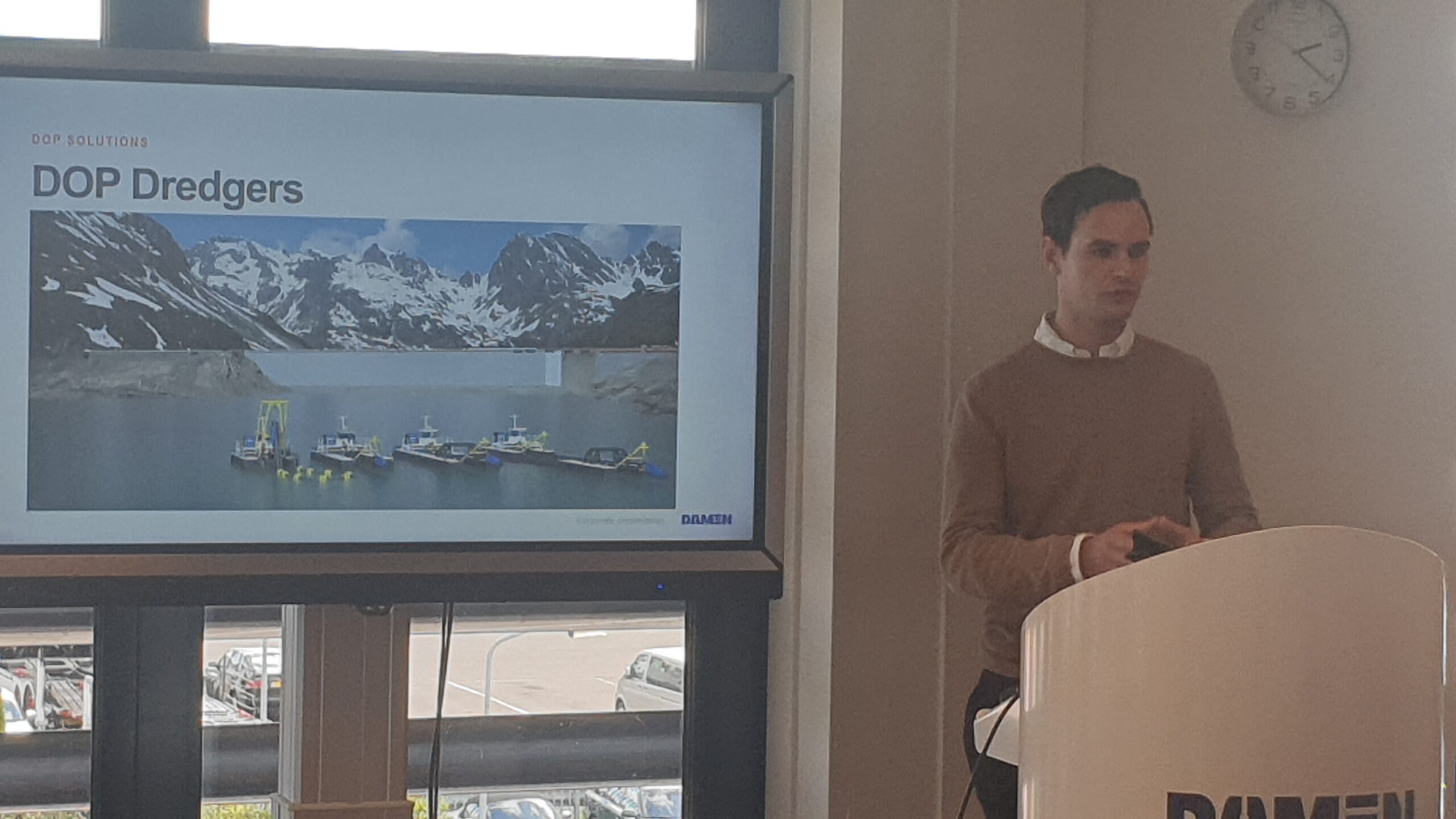
Rick Bekkers giving a presentation on DOP dredges

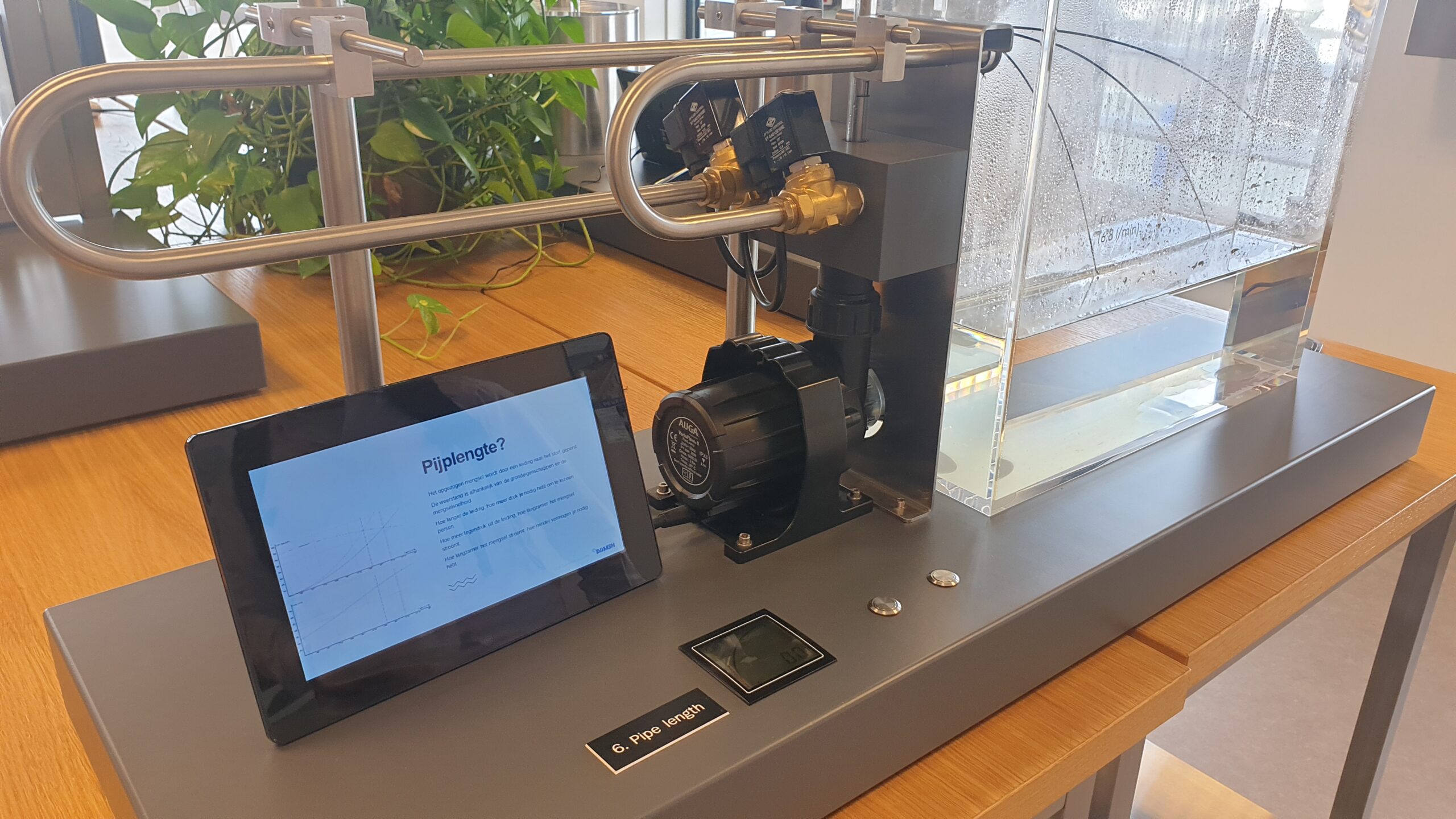
After Rick and Reinier gave a presentation on the premises and the products, there was a yard tour and a demonstration of our dredging simulator by Wouter Beekman. And I am always happy, that the visit to our Damen Dredging Experience was a great success again. We do have our own little museum to experience the difficult issues in the dredging process hands-on6. Literally! Specially for this occasion, the exhibits have been expanded with new informative screens, made by Judith Korver. In a few slides there is an explanation on what the visitor experiences by operating the exhibit.

Informative screen at the pipe length exhibit

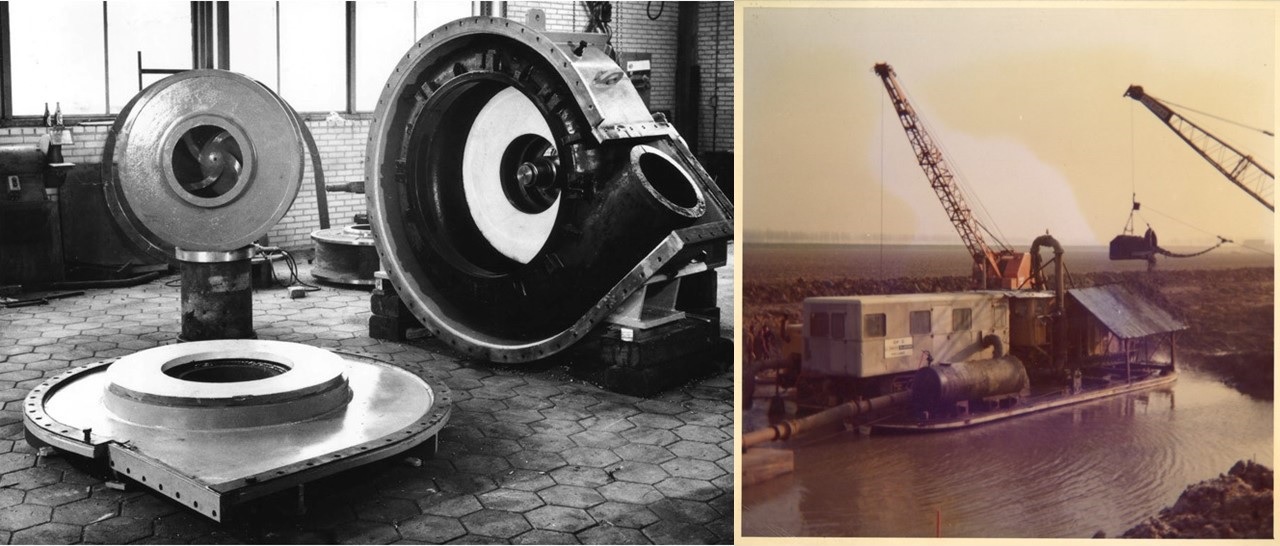
Part of the experience is the staircase leading up to the third floor with the exhibits. In the staircase, there is a collection of wall covering pictures on the history of Damen Dredging Equipment. Personally, I think learning from history is essential to get inspired7. Back in the old days, people had to be very innovative to come up with solutions within their limited technological level. And Mr. de Groot, the founder of our local Damen company was very innovative8. He was the inventor of the double walled dredge pump9 and the soil pumping station10.

Double walled dredge pump(l) and soil pumping station (r)

A lesser known fact by now may be, that originally Mr. C de Groot was a contractor. He was a true descendant from a Giessendam dredging family and tried his luck at the IJsselmeer werken of the 1930’s. As a basecamp, he leased a land lot next to the sea locks of Nijkerk. Later on, he had more fun on building his own equipment and eventually started a manufacturing facility more inland along the approach canal. You can still recognize the original footprint in the current urban landscape.

Arial view of the original area of Damen Dredging Equipment
Arial view of the current area of Damen Dredging Equipment

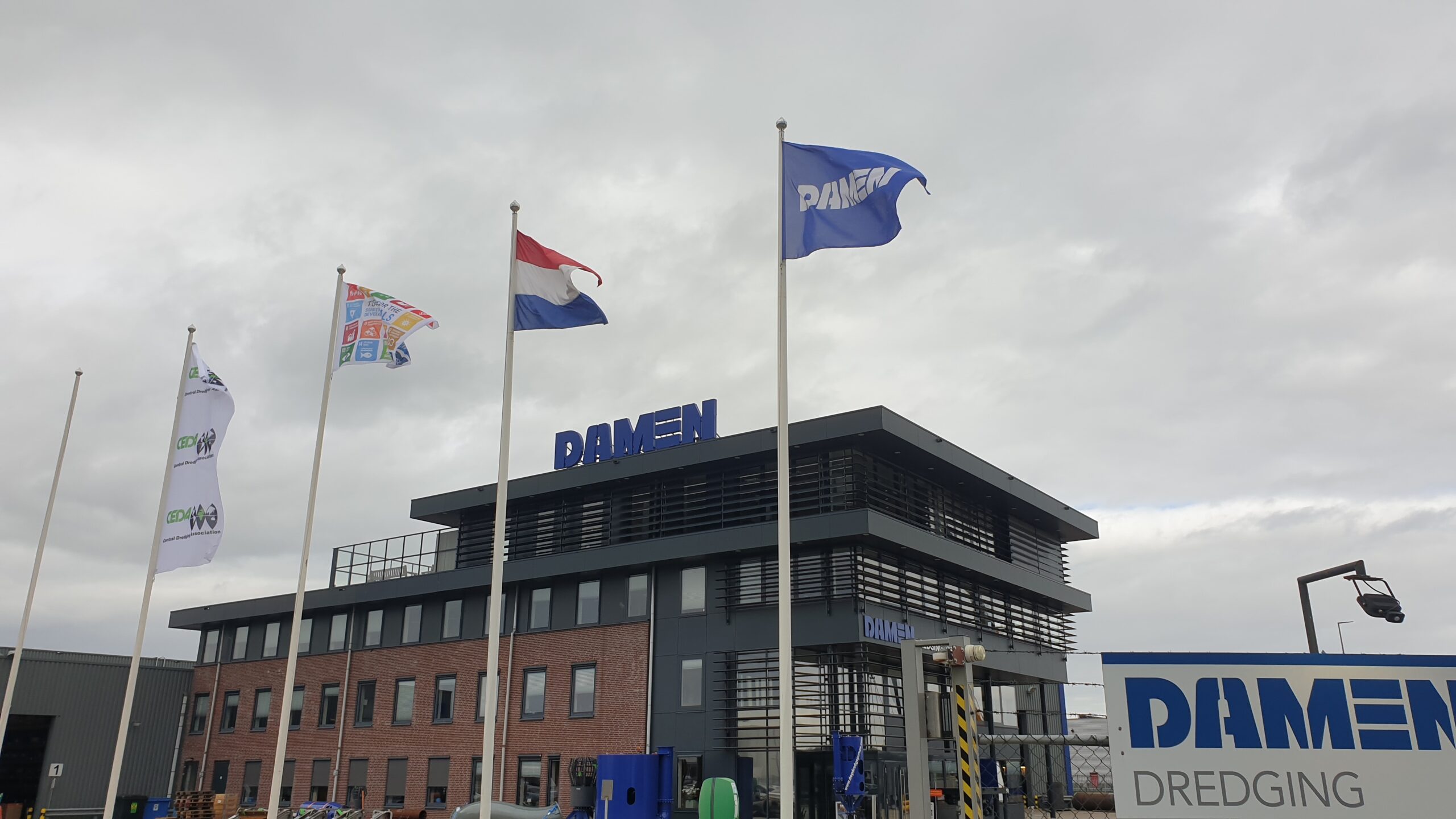
At retirement, Mr. de Groot had no successors and had to sell the company. After an intermediate period, De Groot Nijkerk was acquired by Damen Shipyards8 in 1988. Eventually in 2004 our company was rebranded to Damen Dredging Equipment and we proudly fly the blue colours of the Damen family.

Flags welcoming visitors at the entrance

References

  1. Our Mission, Vision and Strategy, CEDA
  2. About CEDA Dredging Days, CEDA
  3. WODCON’s, WODA
  4. Young CEDA Meetings, CEDA
  5. Young CEDA Site Visit Damen Dredging Equipment, Nijkerk, CEDA
  6. Experience the Dredging Experience, Discover Dredging
  7. Welkom in het Nationaal Baggermuseum, Nationaal Baggermuseum
  8. A long history in dredge building, Damen
  9. How to dress your dredge pump for success, Discover Dredging
  10. Book Review: En De Sé Wie Net Maer, Discover Dredging

See also

Dellewal Terschelling: Stunning Example Ancient Building With Nature

Panorama of the port of West Terschelling and constructed mudflat

For most of us, the summer holiday is already long gone. So for me also. Still there is an observation I made that I want to share with you. We have been sailing on the Waddenzee1 this summer. Sailing, anchoring, mudflat hiking2, counting seals and other animals. One of the highlights was a visit to the island of Terschelling. A lot has changed since I was there last time with our boat. It must have been at least 30 years ago. At that time, we had to moor against the quay wall wherever one could find a spot. Now, there is a modern marine in the back of the port, specially made for yachts. Although stacking the boats next to each other is still the standard.

Port of West Terschelling and the new marina

The new marina is more or less in the same area where we used to moor. From there you have an excellent view on a mudflat, that has been there been for ages3. When I was young, I couldn’t understand what its purpose was. Only that old fashioned Dutch flat bottomed boats were still allowed to anchor and stand dry. For us kids, it was an excellent place to muck about with our little dinghy and get dirty walking on the mudflat. We just enjoyed it was there. I still don’t know the exact name of the mudflat. I’ve seen it called ‘Dellewal’, although that seems to be just the quay side over there. Other names that I found on charts are ‘Oostelijk Ras’ and just ‘De Plaat’. Enjoying a nice sundowner and contemplating life and dredging in particular, I suddenly saw the purpose of the area: it works like a ‘Spuikom’4. I really don’t know how to translate this in English. So, let me explain what it is intended for.

Explanation on the working principle of a ‘Spuikom’

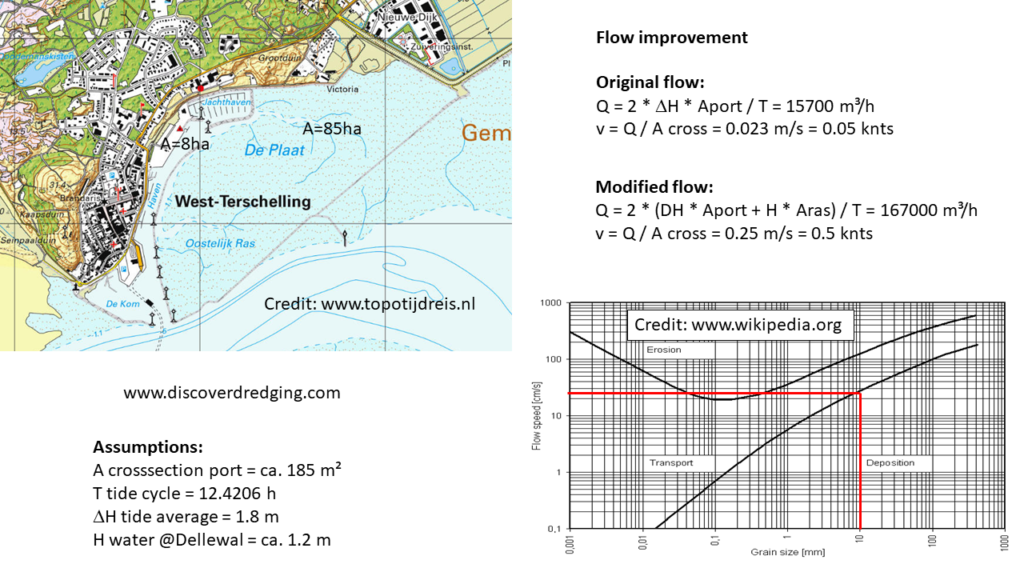
Basically it is a part of the mudflat that is located at the south of Terschelling. About 85 ha in surface area, it is separated from the Waddenzee by a low dam. Just high enough to the high water level in the neap tides. The dam has an opening at the back of the harbour, near the marina. I Noticed that the water outside the marina was rushing by and the water inside was practically standing still. I figured out that the rushing tide was used to flush the old port. The huge surface area stores a lot of water that has to pass the quay in the port. Effectively increasing the flow velocity there and reducing sedimentation. This certainly helps in maintaining a navigable depth for marine traffic. Moreover, as each tide the area is filled from all around the dam and mostly emptied through the port, there is a resulting nett transport out of the port.

Hjulström diagram for particle transport in streams (Credit: Wikipedia)

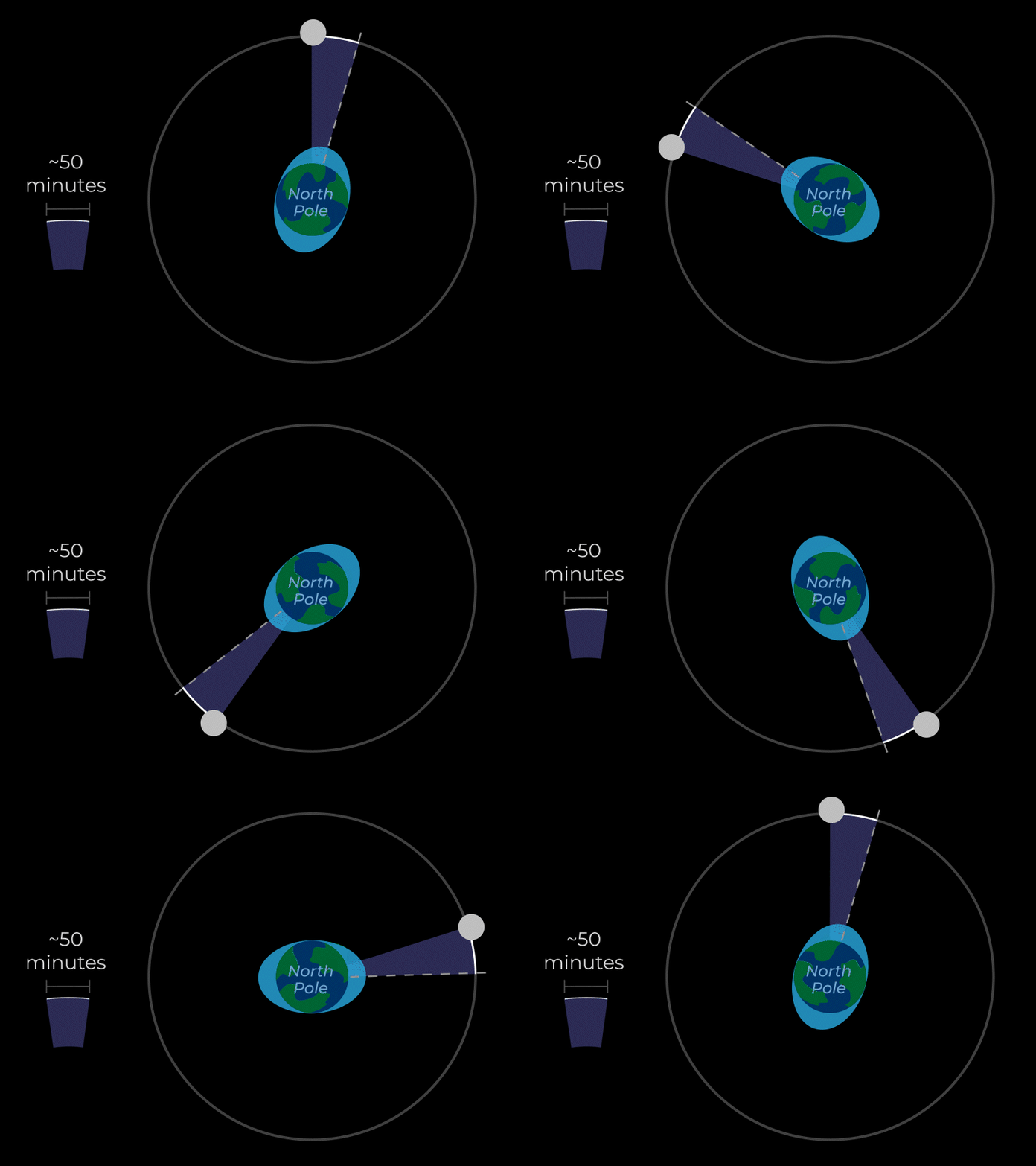
Voila, that is why the old islanders build those dams! Any other person would be satisfied with this plausible answer. Have pity on me, I can’t stop solving the riddles of the sands. Wouldn’t this be easier with a dredge? Apparently, near Terschelling, there is a sedimentation rate of 0.5 to 1 mm per year5, or about 600 m³ annually. With the dam, this has to be kept out of the port with the volume behind the dam. The average increase in flow is about 0.5 knots. According to the Hjuström diagram6, this will transport particles smaller than 10 mm out of the harbour. The stored volume has a potential energy as in a power dam of about 6.25 GJ. This is released twice each tide, resulting in a delivered power of 280 kW. Combined, this results in a specific transport power consumption of 4000 kW/m³/h. No contractor in his right mind will ever use a machine with such a performance. BUT: the energy is free and working flawlessly for at least 200 years. I still have to see a machine doing that. OK. We can step up the analysis even further. Drawing the 280kW continuously from the tide is eventually slowing down the rotation of the Earth. Just for those worried: each year, one day will be in the order of 10-19 seconds longer…

The moon decelerating earth’s rotation by tugging on the tides (Credit: NASA)

References

  1. Wadden Sea, Wikipedia
  2. Mudflat hiking, Wikipedia
  3. Landschapsvisie Baai Dellewal Terschelling, Feddes Olthof
  4. Spuikom, Wikipedia (Dutch))
  5. Slibsedimentatie in de kwelders van de Waddenzee, Arcadis
  6. Hjulström curve, Wikipedia

See also